
How to Improve Gum Health Naturally: Daily Habits That May Help
Healthy gums are an important part of a healthy mouth. They help support your teeth and protect the tissues around them.
Many people do not think about their gums until they notice bleeding, swelling, tenderness, or bad breath. These signs can have different causes. Repeated symptoms should not be ignored.
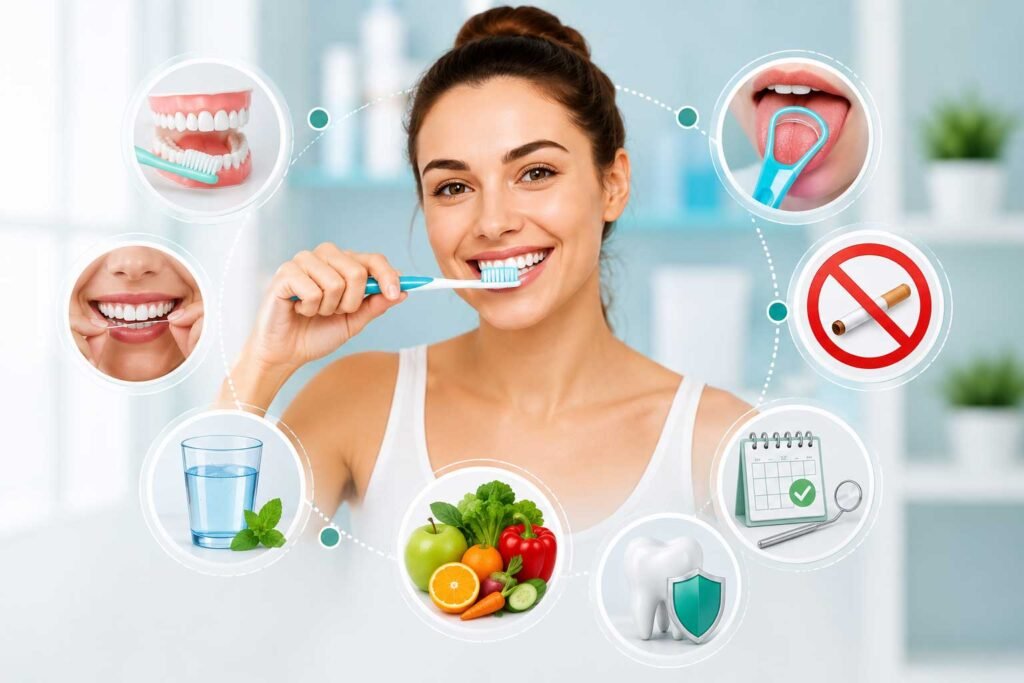
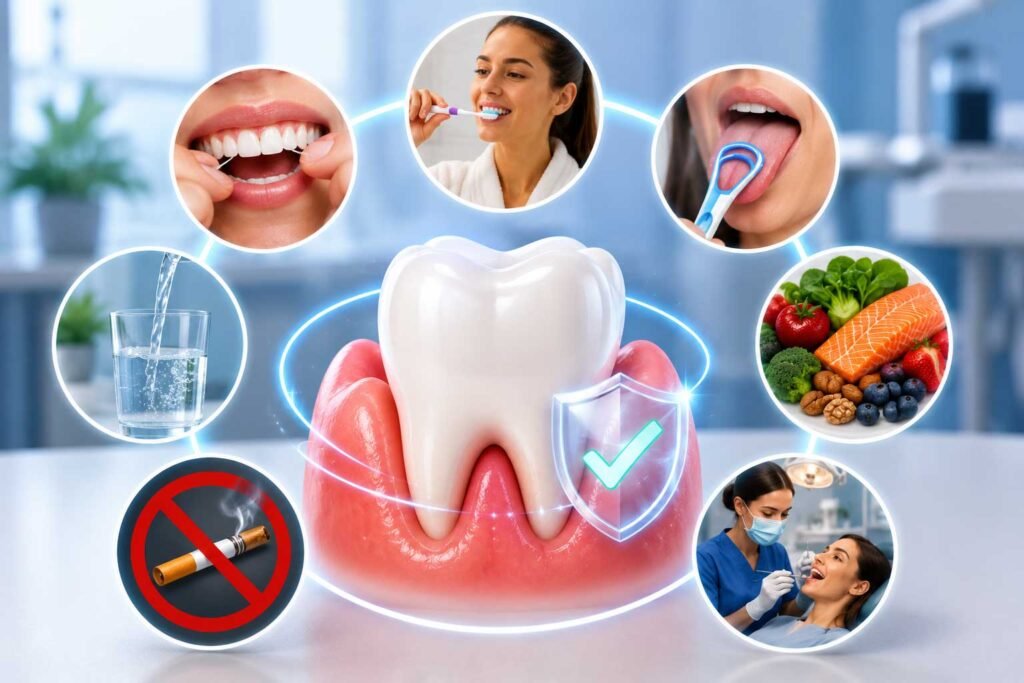
The good news is that gum care does not have to be complicated. Simple daily habits can make a big difference. Brushing twice a day, cleaning between your teeth, avoiding tobacco, and getting regular dental care are key parts of good oral hygiene. The National Institute of Dental and Craniofacial Research (NIDCR) recommends these steps as part of maintaining healthy teeth and gums.
Check the Official ProDentim Offer
Why Gum Health Matters
Your gums do more than frame your smile.
They surround and support your teeth. Healthy gums are usually firm and should not bleed often during normal brushing or cleaning.
Gum problems can start when plaque builds up around the teeth. Plaque is a sticky film that contains bacteria. When plaque is not removed, it can harden into tartar, also called calculus. Tartar cannot be removed with normal brushing and usually requires professional cleaning.
Early gum disease is called gingivitis. Common signs include red, swollen, or bleeding gums.
Without proper care, gum disease can become more serious. It may affect the tissues and bone that support your teeth. In advanced cases, teeth can become loose or may even need to be removed.
That is why learning how to improve gum health is worth making part of your daily routine.
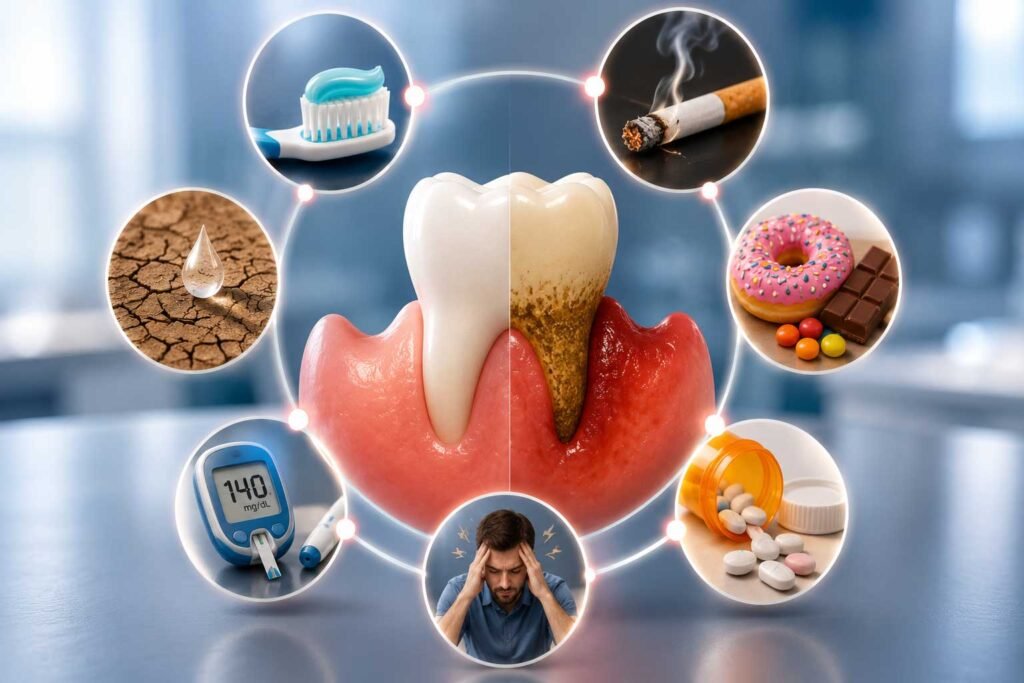
What Causes Poor Gum Health?
There is no single cause of every gum problem. Several factors can affect your gums.
Some are related to daily habits. Others can be linked to health conditions, medicines, genetics, or lifestyle.
Plaque Buildup
Plaque is one of the main causes of gum inflammation.
It develops naturally on teeth. The problem begins when plaque is allowed to stay in place for too long.
Regular brushing and cleaning between your teeth help remove plaque before it hardens into tartar.
Poor Oral Hygiene
Skipping brushing or rarely cleaning between your teeth can allow plaque to build up around the gumline.
A good routine does not need to be complicated. What matters most is doing it consistently.
Smoking and Tobacco
Tobacco is a major risk factor for gum disease.
NIDCR notes that tobacco use can also slow healing and make gum-disease treatment less successful.
Quitting tobacco is one of the most helpful lifestyle changes you can make for your gums.
Diet and Eating Habits
Your diet can also affect oral health.
Frequent sugary foods and drinks can increase the risk of tooth decay. A balanced diet, along with good oral hygiene, can support better dental health.
It is better to focus on your overall eating habits instead of looking for one food that can “heal” your gums.
Dry Mouth
Saliva helps keep the mouth moist and supports the normal oral environment.
Some medicines and health conditions can reduce saliva. Long-term dry mouth can increase the risk of oral problems.
If your mouth often feels very dry, talk with your dentist or healthcare professional to find out why.
Other Risk Factors
Age, diabetes, genetics, stress, certain illnesses, and some medicines can also affect gum health.
This means that even people who follow a good oral-care routine can sometimes develop gum problems.
Signs of Unhealthy Gums
Knowing the common warning signs can help you act sooner.
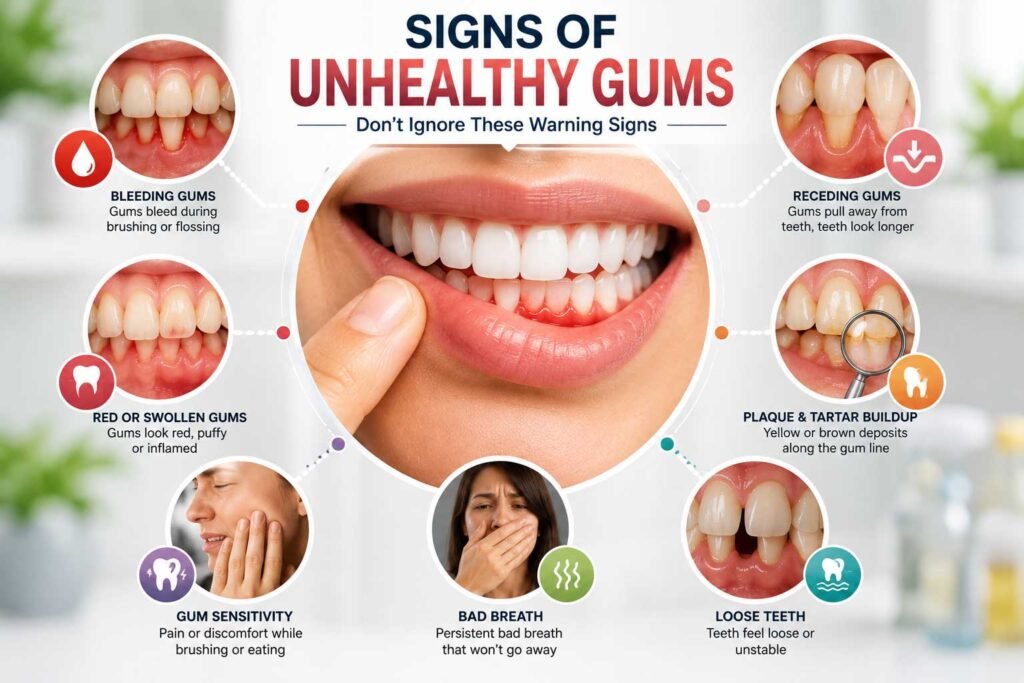
Bleeding Gums
Gums that bleed during brushing or cleaning between your teeth can be a sign of inflammation.
Repeated bleeding should not simply be accepted as normal.
If it continues, make an appointment with a dentist.
Red or Swollen Gums
Healthy gums are usually firm.
Red, swollen, or tender gums may indicate inflammation or another oral-health problem.
Gum Sensitivity
Some people notice tenderness when brushing, flossing, or eating.
Persistent sensitivity should be checked by a dental professional, especially when other symptoms are present.
Persistent Bad Breath
Bad breath can have many possible causes.
Poor oral hygiene, dry mouth, gum problems, tongue buildup, food, tobacco, and some medicines may all play a role.
We have a separate guide about this topic:
What Causes Bad Breath? Common Causes and Ways to Improve It
Receding Gums
Gum recession happens when the gum tissue pulls away from the tooth.
This can make teeth look longer. It may have several causes, so a dental professional should assess noticeable or ongoing recession.
Loose or Sensitive Teeth
Loose teeth, pain when chewing, or increased tooth sensitivity can be signs of more advanced gum problems.
How to Improve Gum Health Naturally
The word “naturally” needs some context.
There is no home remedy that can replace professional treatment for established periodontal disease.
However, several simple habits can support healthy gums and help reduce plaque.
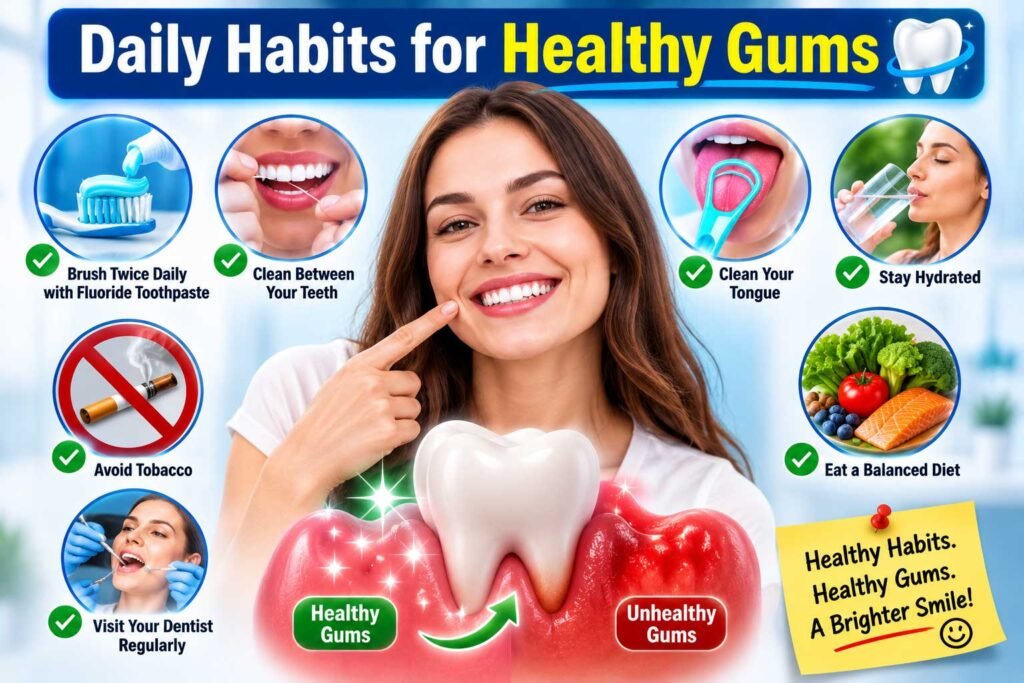
Brush Your Teeth Twice a Day
Brushing is one of the most important parts of daily oral care.
Use fluoride toothpaste and brush twice a day. Clean the outside, inside, and chewing surfaces of your teeth.
Use gentle pressure. Brushing too hard can irritate your gums.
NIDCR recommends brushing twice a day with fluoride toothpaste.
Clean Between Your Teeth
A toothbrush cannot reach every surface between your teeth.
Floss and other interdental cleaners can help remove plaque and food from these hard-to-reach areas.
The American Dental Association says that cleaning between the teeth is an important part of caring for your teeth and gums. Options include dental floss, interdental brushes, and water flossers.
Choose the method that works well for you or follow your dentist’s recommendation.
Clean Your Tongue
The tongue can collect bacteria and food debris.
Gentle tongue cleaning can be part of a daily oral-care routine. Avoid scraping too hard because this can irritate the tongue.
Tongue cleaning can also be helpful when bad breath is a concern.
Stay Hydrated
Drinking water regularly supports hydration and normal saliva flow.
This can be useful when your mouth often feels dry.
However, drinking more water may not solve persistent dry mouth if a medication or health condition is involved. In that case, speak with a healthcare professional.
Avoid Tobacco
Smoking and other tobacco products can damage oral health and increase the risk of gum disease.
Quitting can be difficult, but help is available. A doctor, dentist, or smoking-cessation program can help you choose an approach that fits your needs.
Eat a Balanced Diet
A balanced diet supports your overall health.
For your mouth, it also helps to limit frequent sugary snacks and drinks. Choose a variety of nutritious foods and drink water regularly.
There is no single “best food” that can replace brushing, flossing, or dental care.
Visit Your Dentist Regularly
Home care is important, but it does not replace professional dental care.
A dentist can look for gum inflammation, tartar, cavities, gum recession, and other problems.
Professional cleaning can remove tartar that cannot be removed through normal brushing and flossing.
Can Diet Support Healthy Gums?
Diet is one part of gum health.
Instead of focusing on a single “superfood,” think about your overall eating pattern.
Choose a balanced variety of foods. Limit frequent sugary drinks and snacks. Drink water throughout the day.
These habits can support your general health and your oral-care routine.
However, food cannot remove tartar that has already formed on your teeth. Once tartar develops, it needs professional cleaning.
Can Oral Probiotics Support Gum Health?
Oral probiotics are an area of ongoing research.
The idea is that certain probiotic microorganisms may influence the microbial environment in the mouth.
However, not every probiotic product works in the same way. Results can depend on the specific strain, dose, formulation, and health outcome being studied.
Because of this, oral probiotics should be viewed as a possible supplement to normal oral care, not a replacement for brushing, interdental cleaning, or professional dental treatment.
When researching an oral probiotic, look at the ingredients, directions, product claims, and available evidence.
ProDentim and Gum Health
ProDentim is marketed as an oral probiotic supplement.
The product’s official information lists multiple probiotic strains and other ingredients. However, marketing claims about a supplement should not be treated as proof that it can diagnose, prevent, or treat gum disease.
The best way to evaluate any oral-health supplement is to look at its ingredients, the available evidence, the manufacturer’s information, and your own health needs.
You can read our detailed guide here:
ProDentim Review: Ingredients, Benefits, How It Works & Is It Worth It?
Our review discusses the product, its ingredients, potential benefits, limitations, usage information, and safety considerations.
An oral probiotic should not replace regular brushing, cleaning between teeth, dental checkups, or professional treatment when needed.
What About Mouthwash?
Mouthwash can be useful for some people, but it should not replace brushing and cleaning between the teeth.
Some therapeutic mouthrinses can help with plaque, gingivitis, or bad breath. The right type depends on your oral-health needs.
A dentist can help you decide whether a particular mouthwash is useful for you.
Mouthwash also does not remove tartar. Once tartar forms, professional cleaning may be needed.
When Should You See a Dentist?
Some mild gum problems may improve when you improve your daily oral-care routine.
But persistent symptoms should be checked.
Make a dental appointment if you notice:
- Gums that bleed often
- Persistent gum swelling
- Red or painful gums
- Gum recession
- Loose teeth
- Pain while chewing
- Persistent bad breath
- Ongoing tooth sensitivity
- Pus or unusual discharge around the gums
- Symptoms that keep getting worse
NIDCR notes that people with periodontal disease may need professional treatment based on the severity of the condition. Treatment can include deep cleaning and, in advanced cases, other procedures.
If you have severe swelling, intense pain, fever, or signs of a possible infection, seek professional dental care promptly.
Frequently Asked Questions About Gum Health
How can I improve gum health at home?
Start with the basics. Brush twice a day with fluoride toothpaste. Clean between your teeth once a day or as recommended by your dental professional. Avoid tobacco and keep regular dental appointments.
Can bleeding gums become healthy again?
Early gum inflammation can often improve with better oral hygiene. However, repeated bleeding can have different causes. If it continues, see a dentist for an evaluation.
Is flossing important for gum health?
Yes. Cleaning between your teeth helps remove plaque and food debris from places a toothbrush cannot reach well. The ADA recommends regular interdental cleaning as part of oral care.
Can smoking cause gum problems?
Yes. Tobacco use is a major risk factor for gum disease. It can also make healing and treatment less successful.
Does diabetes affect gum health?
Diabetes is associated with a higher risk of periodontal disease. NIDCR also notes that poorly controlled blood glucose can contribute to oral-health problems.
Can oral probiotics replace dental treatment?
No. Oral probiotics should not be used as a substitute for dental diagnosis or treatment.
What is the best way to prevent gum disease?
A consistent routine is the best place to start. Brush twice a day, clean between your teeth, avoid tobacco, eat a balanced diet, and visit your dentist regularly.
Final Thoughts
Learning how to improve gum health does not require a complicated routine.
Start with the basics.
Brush your teeth twice a day. Clean between your teeth. Keep your mouth hydrated. Avoid tobacco. Pay attention to changes in your gums. And keep your regular dental appointments.
These simple steps can help control plaque and support healthy gums.
If you have ongoing bleeding, swelling, pain, bad breath, gum recession, or loose teeth, do not rely only on home remedies or supplements. A dentist can identify the cause and recommend the right treatment.
If you are interested in oral probiotics, you can learn more in our detailed ProDentim Review.
Check the Official ProDentim Offer
Affiliate Disclosure
This article contains affiliate links. If you purchase a product through one of our affiliate links, we may earn a commission at no additional cost to you.
Health Disclaimer
This article is for educational and informational purposes only. It is not medical or dental advice and does not diagnose, treat, cure, or prevent any disease.
If you have persistent bleeding, swelling, pain, loose teeth, severe bad breath, or other concerning symptoms, consult a qualified dentist or healthcare professional.