
What Causes Bad Breath? Common Causes and Ways to Improve It
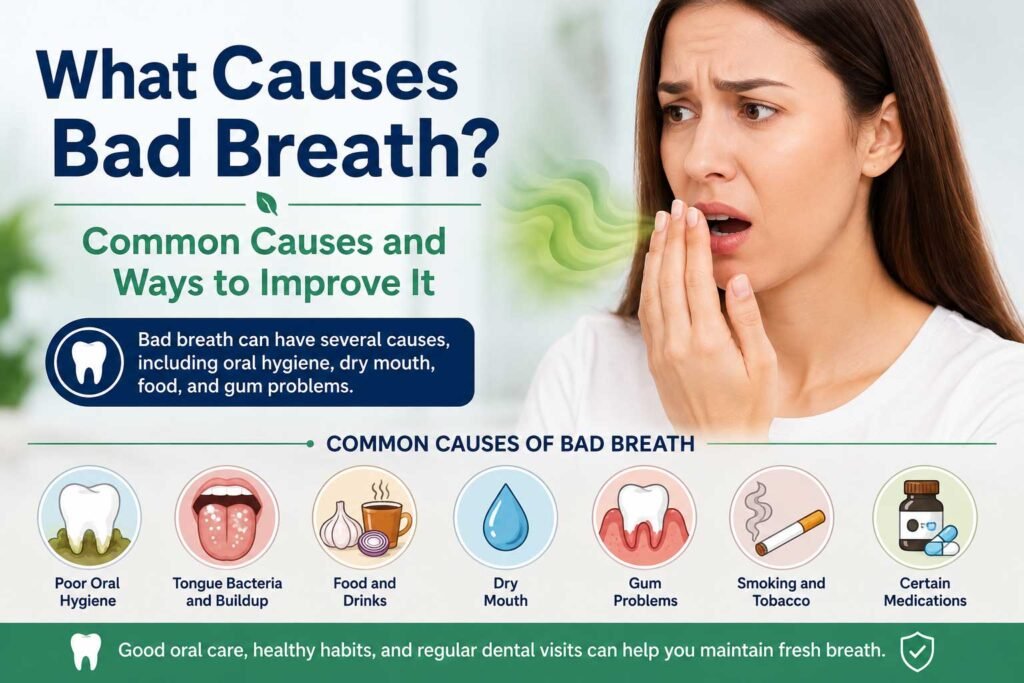
Bad breath, also known as halitosis, is a common oral-health concern. Almost everyone experiences unpleasant breath from time to time, especially after certain foods, drinks or long periods without eating. However, persistent bad breath can sometimes be related to oral hygiene, dry mouth, plaque buildup, gum problems or other underlying factors.
The American Dental Association notes that volatile sulfur compounds are major contributors to oral malodor and can come from sources including food breakdown, dental plaque and bacteria associated with oral disease.
The good news is that many everyday habits can help improve breath freshness. At the same time, persistent bad breath shouldn’t simply be covered up with mints or mouthwash without considering the possible cause.
In this guide, we’ll look at the common causes of bad breath, ways to improve it, the connection between oral health and the oral microbiome, what research says about probiotics, and when it may be time to see a dentist.
What Is Bad Breath?
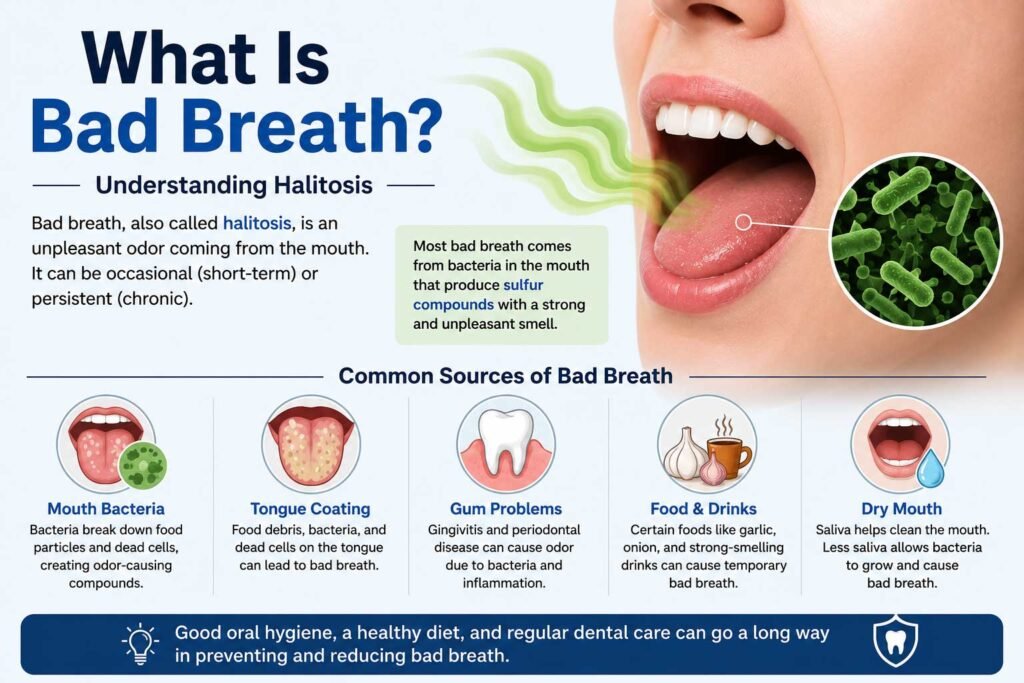
Bad breath refers to an unpleasant odor coming from the mouth.
The medical term for persistent bad breath is halitosis. The odor can come from compounds produced when bacteria break down food particles, proteins and other materials in the mouth.
Bad breath can be temporary or persistent.
Temporary bad breath may occur after eating strongly flavored foods, drinking certain beverages, waking up in the morning or going several hours without eating.
Persistent bad breath is different. If unpleasant breath continues despite regular brushing and good oral hygiene, it may be worth investigating the underlying cause.
The important point is that bad breath is not always simply a cosmetic issue. In some people, it may be associated with plaque buildup, gum problems, dry mouth or another oral-health condition.
What Causes Bad Breath?
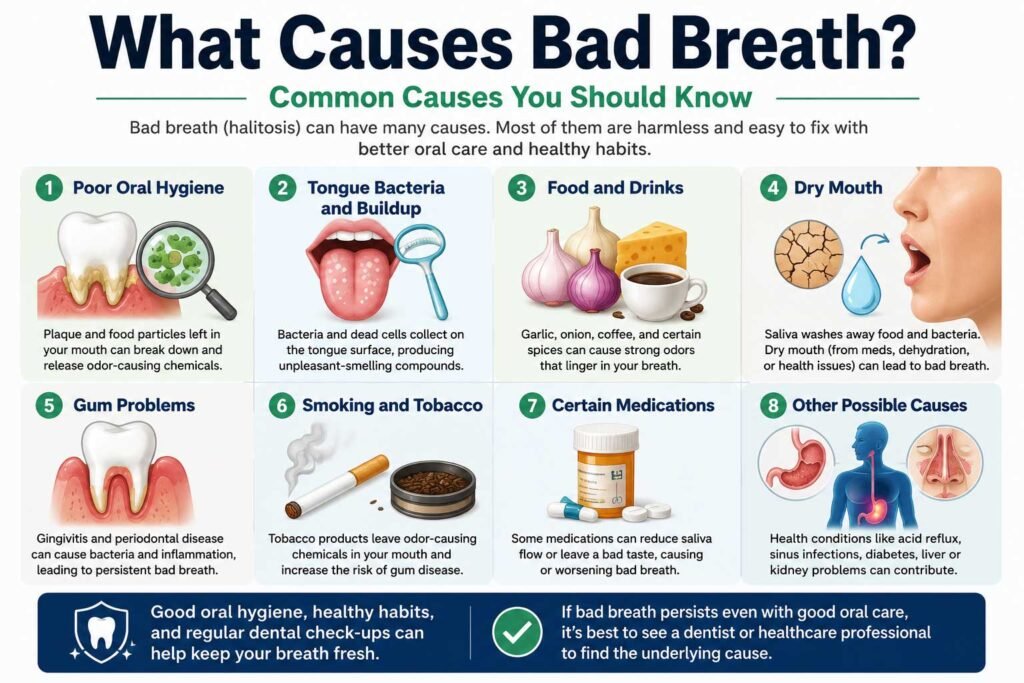
There isn’t one single cause of bad breath. Several factors can contribute to unpleasant breath.
Poor Oral Hygiene
One of the most common factors is inadequate oral hygiene.
Food particles and plaque can accumulate around the teeth and gums. Bacteria can then break down organic material and produce compounds that contribute to unpleasant odors.
Regular brushing and cleaning between the teeth are therefore important parts of maintaining fresh breath.
The American Dental Association recommends brushing and flossing as the foundation of daily oral care, while certain mouthrinses may provide additional benefits for some people.
Tongue Bacteria and Buildup
Your tongue has a large surface area with many small grooves and structures where microorganisms and debris can accumulate.
A coated tongue can therefore contribute to unpleasant breath in some people.
Gently cleaning the tongue as part of your normal oral-hygiene routine may help remove accumulated debris.
However, aggressive scraping is unnecessary and can irritate the tongue.
Food and Drinks
Some foods naturally have strong odors.
Garlic, onions and certain spices can temporarily affect breath. Coffee and alcoholic beverages may also contribute to unpleasant breath for some people.
These effects are often temporary and don’t necessarily indicate a dental problem.
Dry Mouth
Saliva plays an important role in maintaining the oral environment.
It helps clean the mouth, supports swallowing and contributes to the protection of oral tissues and teeth. When saliva production is reduced, the risk of certain oral problems can increase.
The ADA notes that dry mouth can be caused by factors including medications, certain medical conditions, dehydration and medical treatments. Reduced salivary flow can also be associated with bad breath.
If you frequently wake up with a very dry mouth or experience persistent dryness during the day, it may be worth discussing the issue with your dentist or healthcare professional.
Gum Problems
Persistent bad breath can sometimes be associated with gum problems.
Plaque accumulation around the gums can contribute to inflammation and other oral-health issues. The ADA has noted that persistent bad breath can be a warning sign associated with gum disease.
If your gums regularly bleed, swell or feel painful, don’t rely only on products designed to freshen breath. A dental examination can help identify the cause.
Smoking and Tobacco
Tobacco can contribute to unpleasant breath and is also associated with numerous oral-health problems.
Smoking can leave odor-producing compounds in the mouth while also affecting the oral environment.
Avoiding tobacco is therefore an important step for both oral and overall health.
Certain Medications
Some medications can contribute indirectly to bad breath by causing dry mouth.
The ADA notes that many medications can be associated with xerostomia, or dry mouth, and reduced saliva can increase the risk of oral problems and halitosis.
If you believe a medication is causing dry mouth or changes in your breath, don’t stop taking it without medical advice. Instead, discuss the issue with your doctor or pharmacist.
Other Possible Causes
Not every case of persistent bad breath originates from the teeth.
Certain medical conditions, nasal or throat problems, digestive issues and other factors can sometimes be involved.
This is one reason persistent or unexplained bad breath deserves professional attention rather than repeated use of breath-freshening products alone.
How Does Oral Health Affect Bad Breath?
The mouth provides an environment where many different microorganisms live.
Plaque, food particles and other materials can interact with these microorganisms. Some bacteria can produce volatile sulfur compounds, which contribute to unpleasant odors.
This is why good oral hygiene can be an important part of managing bad breath.
Brushing helps remove plaque from tooth surfaces, while cleaning between the teeth can reach areas that a toothbrush may not clean effectively.
Cleaning the tongue may also help remove accumulated debris.
However, good oral hygiene doesn’t mean that every case of bad breath will disappear immediately. If the underlying cause is dry mouth, gum disease, medication-related changes or another condition, additional evaluation may be necessary.
Signs That Your Bad Breath May Need Professional Attention
Occasional bad breath isn’t usually a reason for alarm.
However, consider talking to a dentist if you experience:
- Persistent bad breath despite good oral hygiene
- Frequent bleeding gums
- Swollen or tender gums
- Persistent tooth pain
- Tooth sensitivity that doesn’t improve
- Unexplained mouth sores
- Loose teeth
- Facial or gum swelling
- A persistent unpleasant taste
- Symptoms that continue for several weeks
A dentist can examine your teeth, gums and mouth and help determine whether there is an underlying dental issue.
If you have significant swelling, severe pain, fever or other symptoms suggesting a possible infection, seek professional care promptly.
How to Improve Bad Breath Naturally and Through Good Oral Hygiene
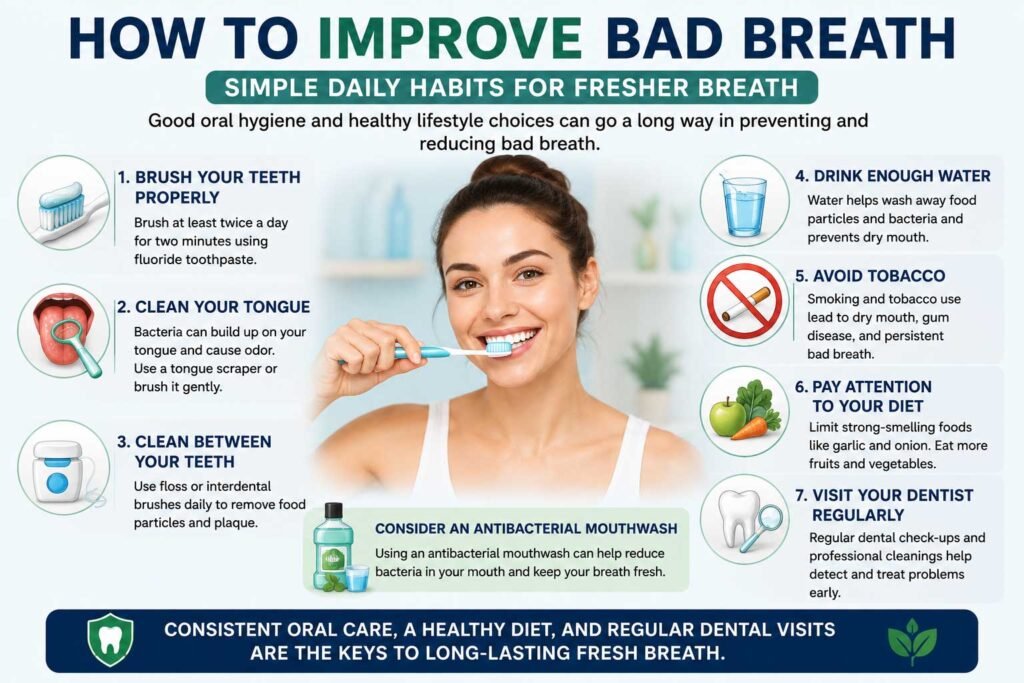
There are several practical steps you can take to support fresher breath.
Brush Your Teeth Properly
Brush your teeth at least twice a day with fluoride toothpaste unless your dentist recommends a different routine.
Spend enough time cleaning all tooth surfaces rather than brushing only the areas that are easy to reach.
A gentle technique is generally preferable to aggressive brushing.
Clean Your Tongue
A tongue cleaner or the tongue-cleaning surface of some toothbrushes can help remove accumulated coating and debris.
Use gentle pressure rather than aggressively scraping the tongue.
Clean Between Your Teeth
Brushing alone cannot clean every surface between your teeth.
Floss, interdental brushes or another dentist-recommended method can help remove food particles and plaque from these areas.
This can be particularly useful if food frequently gets trapped between your teeth.
Drink Enough Water
Staying hydrated can support normal saliva production.
Water can also help rinse the mouth between meals.
If you frequently experience dry mouth, however, simply drinking more water may not address the underlying cause. Persistent dry mouth should be discussed with a healthcare professional.
Avoid Tobacco
Smoking and tobacco use can contribute to unpleasant breath and are associated with oral-health risks.
If you use tobacco, quitting can benefit your oral and general health.
Pay Attention to Your Diet
Strongly flavored foods can temporarily affect breath.
You don’t necessarily need to avoid all such foods, but understanding which foods affect your breath can help you manage temporary odor.
Limiting frequent sugary foods and drinks can also support better dental health.
Visit Your Dentist Regularly
Professional dental care is an important part of maintaining oral health.
A dentist can identify plaque buildup, gum problems, tooth decay and other issues that may contribute to persistent bad breath.
Can Probiotics Help With Bad Breath?
This is an area of continuing research.
Probiotics are live microorganisms that are intended to provide health benefits when consumed in adequate amounts. Researchers have investigated whether particular probiotic strains can influence microorganisms associated with oral health and bad breath.
A 2025 systematic review of randomized controlled trials found that several probiotic interventions were associated with reductions in volatile sulfur compounds and improvements in some measures of oral malodor. However, the researchers also emphasized limitations including the small number of studies and differences among interventions.
A newer 2026 umbrella review of meta-analyses also found potential benefits for certain halitosis-related outcomes, but reported substantial variation between probiotic strains, delivery methods and study designs.
This means the research is interesting, but it doesn’t mean every probiotic supplement has been proven to eliminate bad breath.
The specific probiotic strain, dose, formulation, duration and individual circumstances can all matter.
ProDentim and Bad Breath
ProDentim is marketed as an oral probiotic supplement focused on the oral microbiome.
The product’s official information describes a formulation containing multiple probiotic strains and other ingredients. However, the manufacturer’s disclaimer states that its product statements have not been evaluated by the FDA and that the products are not intended to diagnose, treat, cure or prevent disease.
Therefore, it is important to distinguish between research into oral probiotics generally and evidence about a particular commercial product.
If you’re researching ProDentim, our detailed ProDentim Review covers its ingredients, potential benefits, how it is used, limitations and other considerations.
If you’d like to learn more about the product directly, you can visit the official ProDentim offer here.
ProDentim Ingredients and the Oral Microbiome
The oral microbiome is a complex ecosystem containing many different microorganisms.
ProDentim is marketed around the idea of supporting this environment through selected probiotic strains.
However, the presence of probiotics in a supplement doesn’t automatically prove that the product will produce a specific result for every person.
If you want to understand the oral microbiome in more detail, read our guide:
What Is the Oral Microbiome and Why Does It Matter?
Understanding the broader science can help you evaluate oral-probiotic products more realistically.
Oral Probiotics vs. Regular Oral Hygiene
Oral probiotics and regular oral hygiene shouldn’t be treated as alternatives.
| Regular Oral Hygiene | Oral Probiotics |
|---|---|
| Brushing removes plaque from tooth surfaces | Designed around specific probiotic microorganisms |
| Fluoride toothpaste supports cavity prevention | Research is investigating selected oral-health outcomes |
| Interdental cleaning removes debris and plaque | Effects can vary by strain and formulation |
| Dental visits allow professional evaluation | Generally considered a supplementary approach |
| Established foundation of oral care | An area of continuing research |
The American Dental Association emphasizes that mouthwash does not replace brushing and flossing. The same principle is useful when thinking about oral-probiotic supplements: they should not be treated as replacements for established dental care.
When Should You See a Dentist About Bad Breath?
If bad breath is occasional and disappears after brushing, eating or drinking, it may not indicate a serious problem.
Persistent bad breath is different.
Consider seeing a dentist if:
- Your breath remains unpleasant despite good oral hygiene
- Your gums bleed regularly
- Your gums are swollen or painful
- You have persistent tooth pain
- You notice a loose tooth
- You have swelling around a tooth or gum
- You have a persistent unpleasant taste
- You have unexplained changes inside your mouth
A dental professional can determine whether the problem is related to plaque, gum health, tooth decay, dry mouth or another cause.
If the problem isn’t dental in origin, your dentist may recommend discussing it with another healthcare professional.
Frequently Asked Questions About Bad Breath
Why does my breath smell bad even after brushing?
Brushing helps remove plaque and food debris, but bad breath can have other causes. Tongue buildup, dry mouth, gum problems, certain foods, smoking and some medications can contribute to persistent odor.
Can dry mouth cause bad breath?
Yes. Reduced saliva can change the oral environment and contribute to bad breath. Dry mouth can have many possible causes, including medications and certain medical conditions.
Can gum problems cause bad breath?
They can. Plaque and bacteria associated with gum problems can contribute to unpleasant odors. Persistent bad breath can sometimes be a warning sign that gum health needs attention.
Can probiotics help with bad breath?
Some research suggests that particular probiotic strains may help improve certain measures of halitosis. However, the evidence varies and doesn’t establish that every probiotic product will work in the same way.
How can I keep my breath fresh?
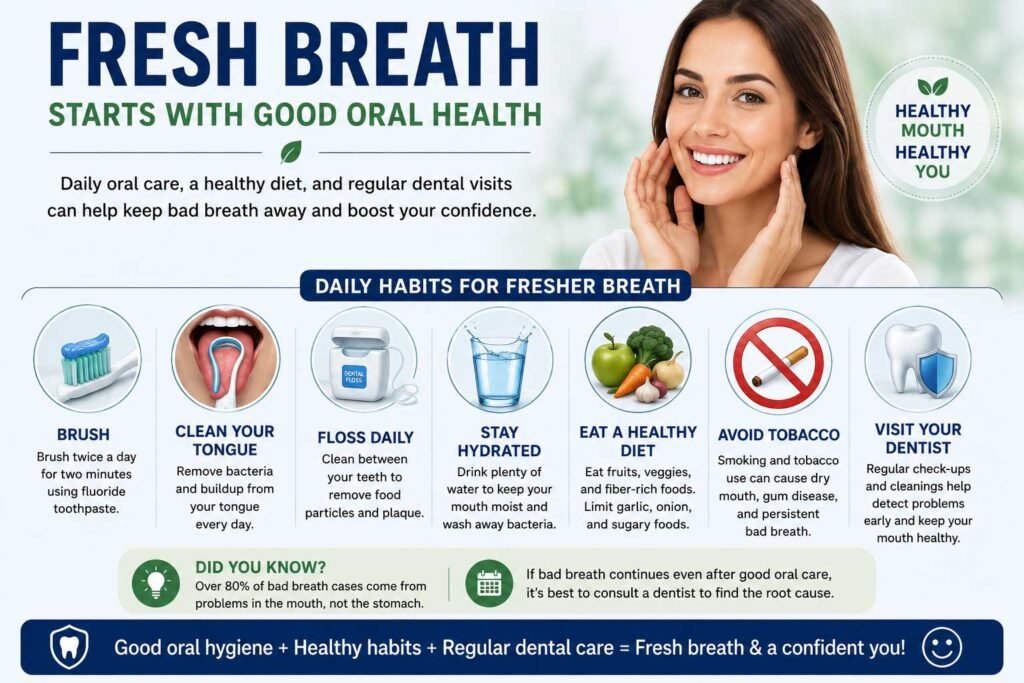
Maintain regular brushing, clean between your teeth, clean your tongue gently, stay hydrated, avoid tobacco and visit your dentist regularly.
Should I use mouthwash every day?
The answer depends on the type of mouthwash and your individual needs. The ADA notes that some therapeutic mouthrinses can help with bad breath and other oral-health concerns, but mouthwash doesn’t replace brushing and flossing.
When should I see a dentist about bad breath?
If bad breath persists despite good oral hygiene, especially when accompanied by bleeding gums, pain, swelling, tooth problems or other unusual symptoms, schedule a dental examination.
Final Thoughts
Bad breath can have many different causes, and identifying the cause is often more useful than simply trying to cover the odor.
For many people, the basics remain the most important: brush regularly with fluoride toothpaste, clean between the teeth, keep the tongue clean, stay hydrated, avoid tobacco and maintain regular dental care.
Research into oral probiotics is also developing. Recent studies suggest that certain probiotic strains may have potential for selected aspects of halitosis, but researchers continue to highlight differences among strains and limitations in the available evidence.
If you’re interested in an oral-probiotic product such as ProDentim, take time to understand the ingredients, product claims and available evidence before making a decision.
You can read our detailed ProDentim Review for additional information.
Want to Learn More About ProDentim?
If you’re interested in checking the current product information and offer, you can visit the official ProDentim offer here.
Affiliate Disclosure
This article contains affiliate links. If you purchase a product through one of our affiliate links, we may receive a commission at no additional cost to you.
Health Disclaimer
This article is provided for educational and informational purposes only and is not medical or dental advice. It does not diagnose, treat, cure or prevent any disease. If you have persistent bad breath, dental pain, swelling, bleeding gums or other concerning symptoms, consult a qualified dental professional.
The information provided about ProDentim should not be considered a substitute for professional medical or dental advice. The product manufacturer’s own disclaimer states that its product statements have not been evaluated by the FDA and that the product is not intended to diagnose, treat, cure or prevent disease.