
What Role Does Therapy Play in Helping People Understand and Manage Anxiety-Related Physical Symptoms?
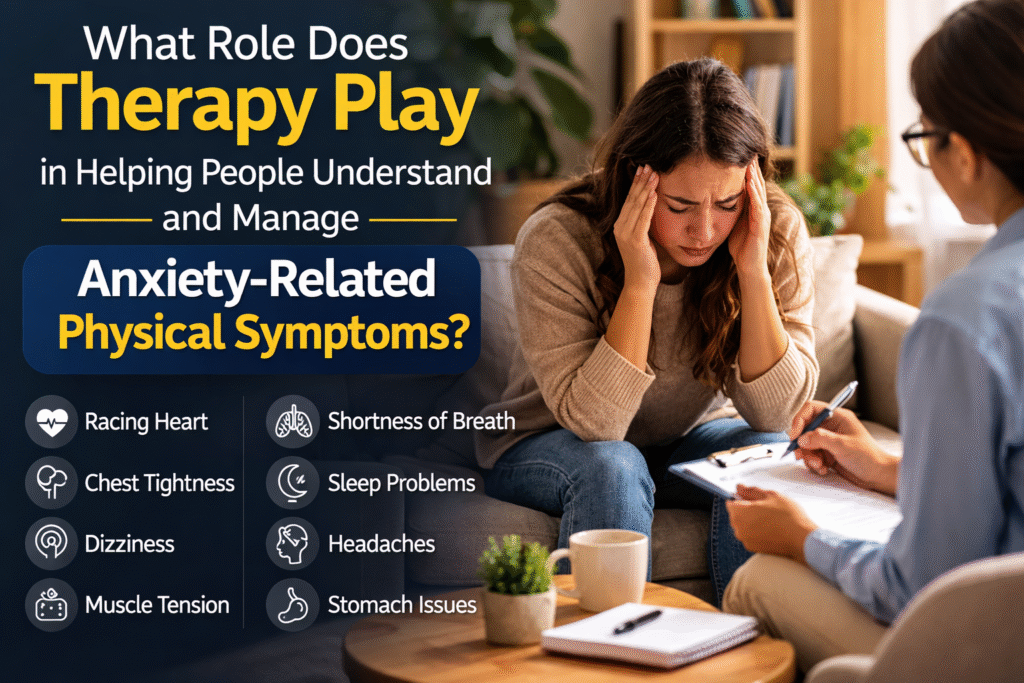
Many people first notice anxiety not in their thoughts, but in their bodies. A racing heart during a quiet evening. Tight shoulders during a routine meeting. A sudden wave of dizziness while standing in line at a grocery store. In real life, these moments can feel confusing because nothing obvious seems wrong, yet the body reacts as if there is danger.
What often happens is that people start searching for physical explanations first. They visit doctors, run medical tests, and try different remedies. Sometimes everything appears normal medically, yet the symptoms continue. This is where many individuals begin to realize that anxiety can show up through physical sensations in ways they never expected.
Therapy plays a key role in helping people understand this connection between mind and body. Rather than dismissing symptoms as “just stress,” therapeutic approaches help individuals recognize why these sensations occur and how to manage them in everyday life.
Understanding Anxiety-Related Physical Symptoms
Anxiety is commonly associated with worry or nervous thoughts, but the body is deeply involved in the experience. In fact, many physical symptoms are caused by the body’s natural stress response.
When the brain perceives danger, it activates what is often called the fight-or-flight response. This system prepares the body to respond quickly by increasing heart rate, tightening muscles, and releasing stress hormones.
For short-term danger, this response is useful. However, when anxiety becomes frequent or chronic, the body may remain in a heightened state of alert.
Common anxiety-related physical symptoms include:
- Rapid heartbeat
- Chest discomfort
- Muscle tension
- Headaches
- Stomach problems
- Dizziness
- Shortness of breath
- Fatigue
These sensations can feel frightening, especially when they appear suddenly. Many people worry that something serious is happening to their health.
Research shows that psychological treatments such as cognitive behavioral therapy (CBT) can significantly reduce both emotional anxiety and physical symptoms related to it.
Why Physical Symptoms of Anxiety Can Be Misunderstood
One of the challenges people face is that anxiety symptoms often mimic physical illnesses.
For example:
- Chest tightness may resemble heart problems
- Dizziness may feel like a neurological issue
- Stomach discomfort may resemble digestive disorders
Because of this overlap, people often go through extensive medical testing before anxiety is considered as a possible cause.
From everyday experience, many individuals describe a pattern like this:
- A physical symptom appears unexpectedly.
- The person worries about the symptom.
- That worry increases anxiety.
- Anxiety intensifies the physical sensation.
This cycle can continue until the individual feels trapped in a loop of symptoms and fear.
Therapy helps break this loop by addressing both the emotional and physical aspects of anxiety.
The Mind-Body Connection in Anxiety
Modern psychological research increasingly highlights the connection between emotional states and physical sensations.
The nervous system constantly communicates between the brain and the body. When someone experiences stress or worry, the brain sends signals that influence breathing, heart rate, muscle tension, and digestion.
Mind-body therapies aim to help people become more aware of this connection. In many cases, understanding what is happening inside the body can reduce fear and uncertainty.
For example:
A person experiencing dizziness during stressful meetings might assume something is medically wrong. Through therapy, they may learn that shallow breathing during stress can lead to temporary dizziness.
Recognizing this pattern can reduce panic and restore a sense of control.
How Therapy Helps People Recognize Anxiety Signals
One of the first steps in therapy is learning to recognize how anxiety appears in the body.
Many people are surprised to discover how predictable their patterns actually are.
Therapists often help clients track symptoms by exploring questions like:
- When do the physical sensations appear?
- What thoughts occur at that moment?
- What is happening in the environment?
- How does the body react?
Over time, people begin to see connections they may not have noticed before.
For instance:
Someone might realize that stomach discomfort often appears before important deadlines or social interactions. Another person may notice that muscle tension increases during periods of uncertainty.
This awareness alone can reduce anxiety because the symptoms become less mysterious.
Cognitive Behavioral Therapy (CBT) and Physical Anxiety Symptoms
Cognitive behavioral therapy is one of the most widely studied psychological treatments for anxiety.
Many mental health professionals consider it one of the most effective therapies for anxiety disorders.
CBT focuses on three core areas:
- Thoughts
- Behaviors
- Physical reactions
Instead of treating these elements separately, CBT explores how they influence each other.
For example:
A person may think, “My heart is racing, something is wrong.”
That thought increases fear.
Fear intensifies the racing heartbeat.
CBT helps people challenge these interpretations and develop more balanced perspectives.
Research suggests CBT can improve both emotional anxiety and related physical symptoms while improving overall functioning.
Learning Practical Coping Techniques in Therapy
Another important role of therapy is teaching practical tools that people can use outside the therapy room.
These strategies help calm the body’s stress response and reduce physical symptoms.
Common techniques include:
Breathing Exercises
Controlled breathing helps regulate the nervous system.
Certain breathing practices activate the parasympathetic nervous system, which promotes relaxation and reduces stress responses.
People often practice breathing exercises when they notice early signs of anxiety.
Muscle Relaxation
Progressive muscle relaxation teaches people to release tension in different muscle groups.
Many individuals with anxiety unknowingly hold tension in areas such as the shoulders, jaw, or neck.
Learning to relax these muscles can significantly reduce discomfort.
Mindfulness Practices
Mindfulness encourages people to observe sensations without immediately reacting to them.
Instead of interpreting a racing heart as danger, individuals learn to notice the sensation and allow it to pass.
Mindfulness techniques can help reduce both stress and physical symptoms associated with anxiety.
Somatic Therapy and Body Awareness
Some therapies focus directly on bodily sensations.
Somatic therapy, for example, explores how emotions and stress are stored in the body.
Rather than focusing only on thoughts, this approach encourages people to observe physical sensations, movements, and posture.
The goal is to help individuals reconnect with their body in a safe and controlled way.
Somatic approaches often include:
- Body awareness exercises
- Grounding techniques
- Gentle movement
- Visualization practices
These methods help people develop a greater understanding of how emotional experiences appear physically.
Building a Healthier Relationship With Physical Sensations
A major benefit of therapy is that it changes how people interpret physical sensations.
Before therapy, a person may view symptoms as a sign that something is seriously wrong.
After learning about anxiety, those same sensations may be interpreted differently.
For example:
Instead of thinking:
“Something is wrong with my heart.”
A person might think:
“My body is responding to stress right now.”
This shift in interpretation can significantly reduce panic and fear.
Reducing the Fear of Symptoms
Many individuals with anxiety develop a strong fear of their own physical sensations.
This fear can cause people to avoid situations that might trigger symptoms.
Examples include:
- Avoiding crowded places
- Avoiding exercise
- Avoiding social events
- Avoiding travel
Therapy often uses gradual exposure techniques to help people rebuild confidence.
By facing situations slowly and safely, individuals learn that physical sensations are manageable and temporary.
Improving Daily Functioning
When anxiety symptoms become overwhelming, they can interfere with daily life.
People may struggle with:
- Concentration
- Sleep
- Work performance
- Relationships
Therapy focuses on improving overall functioning rather than simply eliminating symptoms.
Mental health professionals often help clients develop strategies for:
- Stress management
- Work-life balance
- Healthy routines
- Emotional regulation
The goal is to create a sustainable lifestyle that supports mental and physical well-being.
Therapy and Long-Term Anxiety Management
Another important aspect of therapy is that it focuses on long-term skills.
Instead of providing quick fixes, therapy teaches people how to manage anxiety over time.
Clients often learn:
- How to identify early signs of stress
- How to respond to anxiety before symptoms escalate
- How to build resilience during difficult periods
These skills remain useful long after therapy sessions end.
When Therapy Is Combined With Other Treatments
In some cases, therapy may be combined with other forms of treatment.
Medical professionals sometimes recommend medication alongside psychotherapy for anxiety disorders.
According to clinical guidance, psychotherapy and medication together may provide the most benefit for some individuals.
However, treatment plans vary widely depending on personal needs, preferences, and medical advice.
Everyday Situations Where Therapy Makes a Difference
To understand the impact of therapy, it helps to look at everyday situations.
Example 1: Workplace Anxiety
A professional notices intense chest tightness before presentations.
Through therapy, they learn that shallow breathing during stress triggers the sensation.
By practicing breathing techniques and reframing anxious thoughts, the symptoms gradually become easier to manage.
Example 2: Health Anxiety
Another individual experiences frequent dizziness and fears serious illness.
Medical tests show no physical condition.
Therapy helps them understand how anxiety affects balance and breathing. Over time, the dizziness becomes less frightening.
The Importance of Professional Guidance
While many self-help strategies exist, professional therapy offers several advantages.
Therapists provide:
- Objective perspectives
- Structured techniques
- Emotional support
- Personalized treatment plans
They also help people navigate challenges that may arise during the recovery process.
Therapy as a Tool for Self-Understanding
Beyond symptom relief, therapy often leads to deeper self-understanding.
People frequently discover patterns related to:
- Stress triggers
- Personal boundaries
- Emotional habits
- Lifestyle choices
These insights help individuals make meaningful changes that support long-term well-being.
When Someone Might Consider Therapy for Anxiety Symptoms
People often consider therapy when:
- Physical symptoms appear frequently
- Medical tests do not explain the symptoms
- Anxiety interferes with daily life
- Stress becomes difficult to manage alone
Seeking help early can sometimes prevent symptoms from becoming more disruptive over time.
A Calm Way to Learn More
Understanding anxiety-related physical symptoms can take time, and many people find it helpful to explore additional information and resources.
If you’re interested in learning more about approaches that focus on anxiety, stress awareness, and mind-body understanding, you can explore additional details here:
This resource may provide further insight into strategies people often use when learning about stress and emotional well-being.
Affiliate Disclaimer
This article may contain affiliate links. This means that if readers explore certain resources through the links provided, the website may receive a small commission at no additional cost to the reader. The purpose of including these links is to provide educational resources that some readers may find useful when learning about anxiety and emotional well-being.
The information in this article is intended for educational purposes only and should not be considered medical advice, diagnosis, or treatment. Individuals experiencing persistent physical or emotional symptoms should consult a qualified healthcare professional.
therapy for anxiety physical symptoms, anxiety chest pain therapy, CBT for anxiety symptoms, somatic anxiety treatment, anxiety body symptoms help, therapy for panic symptoms, managing anxiety physically, mind body anxiety therapy, anxiety counseling benefits USA
AnxietyHelp #MentalHealthAwareness #TherapyWorks #MindBodyConnection #AnxietySupport #MentalWellness #StressManagement