
Medicinal Seed Kit Review: What’s Included, How It Works & Is It Worth It?
Growing herbs at home has become more interesting for people who want a closer connection with gardening, plants, and natural living.
Instead of buying every herb separately, a seed kit can make the process simpler. It can give beginners a starting point and help them learn how different plants grow.
The Medicinal Seed Kit is marketed around this idea. Product-related materials describe it as a collection of medicinal and herbal seeds intended for home growing. Available promotional information also describes a growing guide that can help users move from planting and caring for the plants to harvesting them.
But there is an important distinction.
Growing a medicinal herb is not the same as having a proven medical treatment.
Some herbs have a long history of traditional use. Some have also been studied by researchers. Yet the evidence, safety, dose, and quality can vary from one plant to another.
That is why this review takes a closer look at what the Medicinal Seed Kit is, what you may receive, how a kit like this can fit into a home garden, what to consider before using medicinal plants, and whether it may be worth considering.
Learn More About the Medicinal Seed Kit
What Is the Medicinal Seed Kit?
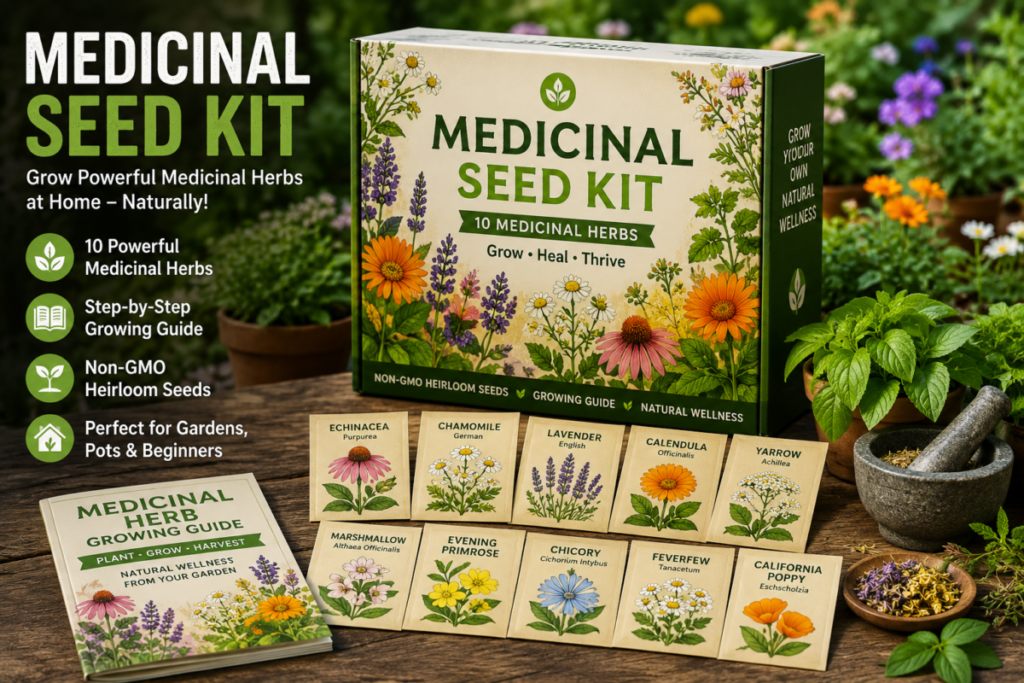
The Medicinal Seed Kit is presented as a home gardening product centered around medicinal and herbal plants.
The basic idea is simple. Instead of searching for many different herb seeds and growing guides, the kit brings a group of seeds and educational material together.
Product-related descriptions of the kit mention multiple medicinal plant varieties, growing instructions, and a guide that covers planting and later use of the plants. One current promotional source lists herbs such as marshmallow, echinacea, evening primrose, calendula, chamomile, chicory, yarrow, lavender, feverfew, and California poppy.
However, the exact contents of a kit can change.
For that reason, buyers should check the current sales page and package details before ordering rather than relying on an older article or social-media post.
The bigger appeal is not only the seeds.
For beginners, having a collection of plants and growing information in one place can make the first steps feel less overwhelming.
What’s Included in the Medicinal Seed Kit?
The specific contents should always be confirmed on the current product page.
Based on currently available product-related materials, the kit has been promoted around multiple medicinal herb varieties plus growing and usage guidance.
Some commonly mentioned plants include:
- Marshmallow
- Echinacea
- Evening primrose
- Calendula
- Chamomile
- Chicory
- Yarrow
- Lavender
- Feverfew
- California poppy
Each plant has different growing needs.
Some prefer full sun. Others may tolerate partial shade. Some need more water, while others prefer soil that drains quickly.
That is why a growing guide can be useful, especially for people who are new to herb gardening.
It is also worth remembering that a seed kit is not the same as a finished herbal supplement. You still need to plant the seeds, care for the plants, manage pests, harvest them correctly, and store or use the plant material safely.
How Does a Medicinal Seed Kit Work?
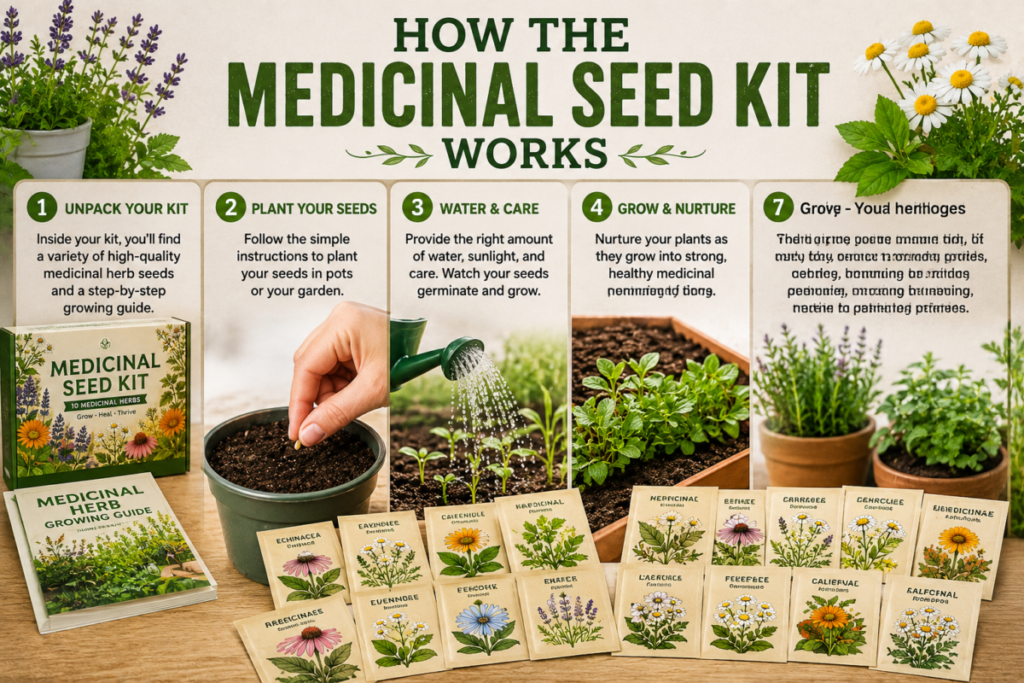
The basic process is similar to starting any home garden.
Step 1: Choose Your Growing Space
Look for a place with enough light and suitable conditions for the plants you plan to grow.
Depending on your climate and the plant, this could be:
- A backyard
- Raised garden beds
- Patio containers
- Grow bags
- A balcony
- A sunny indoor window
Not every herb will thrive in the same environment.
Step 2: Read the Growing Instructions
Before planting, check the instructions for each seed.
Important details can include:
- Planting depth
- Soil type
- Water needs
- Sunlight
- Germination time
- Spacing
- Temperature
Following the instructions can prevent common beginner mistakes.
Step 3: Plant the Seeds
Plant according to the recommended depth and spacing.
Do not assume that every seed should be buried deeply. Some small seeds need light or shallow planting.
Step 4: Care for the Plants
Seedlings need consistent care.
Water them when needed, provide enough light, and watch for signs of pests or plant stress.
Step 5: Harvest Carefully
Harvest time depends on the plant and the part you plan to use.
Some herbs are harvested for leaves. Others may use flowers, roots, or seeds.
If the kit includes instructions for harvesting and preparation, follow those directions carefully.
Why Are People Interested in Growing Medicinal Herbs at Home?
There are several reasons people start an herbal garden.
Learning and Education
Growing plants lets you see how herbs develop from seeds into mature plants.
This can be especially useful for beginners who want to learn more about gardening.
Fresh Home-Grown Herbs
Growing herbs yourself can give you access to fresh plant material.
That does not automatically mean the plants are more powerful or more effective than commercial products. It simply means you have more control over how the plants are grown and harvested.
Gardening as a Hobby
Gardening can also be enjoyable on its own.
A home herb garden gives you a practical project that can change with the seasons.
Self-Sufficiency
Some people like the idea of producing more of what they use at home.
Growing herbs can fit into that lifestyle, especially for people who already enjoy gardening, cooking, or learning traditional plant uses.
Check the Current Medicinal Seed Kit Offer
What Are the Potential Benefits of Medicinal Herbs?
This is where expectations matter.
Different plants have different histories, uses, and levels of scientific evidence.
For example, chamomile has been studied for several possible health effects, while echinacea has been investigated mainly in connection with upper respiratory infections. The National Center for Complementary and Integrative Health (NCCIH) notes that evidence varies by herb and by health condition.
Some traditional uses may have limited clinical evidence. Others may have more research behind them.
So it is better to think about a medicinal herb garden as a source of plants and learning, rather than a guaranteed source of medical treatment.
That distinction is especially important when dealing with serious symptoms or diagnosed conditions.
Medicinal Herbs Are Not Automatically Safe
Natural does not always mean risk-free.
Plants contain active chemicals. Those compounds may affect the body and can sometimes interact with medicines.
The NCCIH advises that herbal products can have side effects and may interact with prescription or over-the-counter medicines.
That is particularly important with plants that are traditionally used for sleep, pain, mood, inflammation, blood pressure, or other health concerns.
Before turning a plant into a tea, tincture, extract, salve, or other home remedy, learn about the specific plant and its safety profile.
If you take prescription medicine or have a medical condition, talk with a qualified healthcare professional before using medicinal herbs for health purposes.
Can You Grow Medicinal Herbs in a Small Space?
Yes, many herbs can be grown in containers.
You do not necessarily need a large backyard.
A sunny balcony, patio, or window can be enough for certain plants.
The key is choosing herbs that match your available conditions.
Before buying or planting, consider:
Sunlight
Some herbs need several hours of direct sunlight.
Container Size
Plants with larger root systems may require larger pots.
Drainage
Waterlogged soil can damage many herbs.
Climate
Not every herb grows well in every US climate zone.
For this reason, local growing conditions matter.
A seed kit can provide variety, but you still need to match each plant to the environment where you live.
Is the Medicinal Seed Kit Good for Beginners?
A seed kit can be useful for beginners because it reduces the need to research and purchase many individual seeds.
The educational guide can also give users a starting point for planting and care.
Still, beginners should not expect every seed to germinate at exactly the same time.
Germination depends on several factors, including:
- Seed quality
- Temperature
- Moisture
- Soil
- Light
- Planting depth
- Age of the seeds
Even an experienced gardener can have occasional failures.
That is normal.
The goal should be to learn the process and improve over time rather than expecting every seed to become a healthy plant.
Medicinal Seed Kit Pros and Cons
Looking at both sides can make a buying decision easier.
Pros
- Convenient collection of medicinal herb seeds
- Useful starting point for home gardeners
- Can introduce beginners to several plant varieties
- May include growing guidance
- Can be used in containers or outdoor gardens depending on the plant
- Provides an educational gardening project
- Can fit a natural-living or self-sufficiency lifestyle
Cons
- Seeds require time and ongoing care
- Growing results vary by climate and gardening conditions
- Not every plant will be suitable for every gardener
- The exact kit contents may change
- Growing medicinal herbs does not replace medical treatment
- Some herbs may interact with medications
- Beginners may need to learn additional plant-care skills
The biggest consideration is simple: this is a gardening project, not a medical shortcut.
Medicinal Seed Kit vs. Buying Herbs
Some people may wonder whether it is easier to buy herbs instead of growing them.
There are advantages to both approaches.
Buying dried herbs or finished herbal products can be more convenient.
Growing your own gives you a different experience. You control the growing process and learn how the plant develops.
A seed kit can therefore be a better fit for someone who enjoys the gardening side of natural living.
Someone looking for immediate access to an herbal product may prefer a ready-made option.
Your goal should determine your choice.
Things to Consider Before Buying
Before ordering the Medicinal Seed Kit, consider these questions.
Do You Have Enough Light?
Check how much sunlight your growing area receives.
Do You Have Time to Garden?
Seeds need regular attention.
If you travel often or have very limited time, maintaining several plants may be difficult.
Do You Know Your Climate?
The US contains many different growing conditions.
A plant that grows easily in Florida may need a very different approach in Minnesota or Arizona.
Are You Interested in Gardening?
A seed kit makes the most sense if you actually enjoy growing plants or want to learn.
Are You Expecting Medical Results?
This is the most important question.
If you are buying the product because you have a medical condition, do not assume that growing an herb will treat that condition.
Talk with a qualified professional about appropriate care.
See the Official Medicinal Seed Kit Details
How to Get Better Results From Your Herbal Garden
You do not need to be an expert gardener to improve your chances of success.
Start with the basics.
Label Your Plants
Keep track of what you planted.
This is especially useful when several herbs look similar as young seedlings.
Follow Plant-Specific Instructions
Do not use one watering schedule for every plant.
Different species have different needs.
Avoid Overwatering
Beginners often assume that more water means faster growth.
That is not always true.
Too much water can damage roots and encourage plant problems.
Give Plants Enough Space
Crowded plants compete for light, air, water, and nutrients.
Follow spacing guidance whenever possible.
Keep a Simple Garden Log
Write down:
- Planting date
- Germination date
- Watering notes
- Harvest date
- Problems you notice
This can make the next growing season easier.
Is the Medicinal Seed Kit Worth It?
Whether the Medicinal Seed Kit is worth buying depends on what you want.
For someone who wants to start a home herbal garden, a curated collection of seeds may be more convenient than researching dozens of individual varieties.
It may also be useful for someone who wants a structured introduction to medicinal plant gardening.
But the value depends on the exact package, number of seeds, growing instructions, current price, shipping terms, and your ability to successfully grow the plants.
Those details can change, so review the current offer before ordering.
I would not view the kit as a replacement for conventional healthcare.
I would view it as a gardening and herbal-education product that may fit people interested in growing plants at home.
Frequently Asked Questions About the Medicinal Seed Kit
What is the Medicinal Seed Kit?
It is marketed as a collection of medicinal and herbal plant seeds intended for home gardening. Product-related materials also describe growing guidance to help users plant and care for the herbs.
Is the Medicinal Seed Kit good for beginners?
It may be suitable for beginners because a curated seed collection and growing guide can make starting easier. However, results still depend on the plant, climate, soil, moisture, light, and care.
How many plants are included?
The exact number can vary depending on the current offer or package. Current promotional materials have described multiple varieties, including ten medicinal plants in some presentations. Check the current sales page for the exact package you are considering.
Can medicinal herbs replace medicine?
No. Growing an herb does not make it a replacement for prescribed medication or professional medical treatment.
Are medicinal herbs safe for everyone?
No. Some herbs can cause side effects or interact with medicines. Pregnant people, children, older adults, and people taking medication should be especially careful and seek professional advice when appropriate.
Can I grow these herbs indoors?
Some herbs can be grown indoors, but their needs vary. Light, temperature, container size, and humidity all matter.
How long do medicinal herbs take to grow?
There is no single answer. Germination and maturity times vary widely by plant.
Where can I buy the Medicinal Seed Kit?
You can review the current product information and offer through the official sales process:
Visit the Official Medicinal Seed Kit Offer
Final Verdict
The Medicinal Seed Kit is an interesting option for people who want to explore home gardening and medicinal herbs.
Its biggest appeal is convenience. Instead of starting with a blank garden and researching every plant from scratch, a curated kit can provide a starting point.
It can also be a useful learning experience.
However, expectations matter.
Growing medicinal herbs is not the same as having a proven treatment for a disease. Some herbs have traditional uses and some have been studied by researchers, but evidence varies widely from one plant to another.
The kit makes more sense for someone who enjoys gardening, natural living, plant education, or home growing.
Before purchasing, check the current package contents, growing instructions, price, shipping information, refund terms, and any claims made on the sales page.
Check the Current Medicinal Seed Kit Offer
Affiliate Disclosure
This article contains affiliate links. If you purchase the Medicinal Seed Kit through one of our affiliate links, we may earn a commission at no additional cost to you.
Health Disclaimer
This article is for educational and informational purposes only. It is not medical advice and does not diagnose, treat, cure, or prevent any disease.
Medicinal plants can have active compounds and may interact with medications or cause side effects. Always research a specific herb carefully and speak with a qualified healthcare professional before using medicinal plants for health purposes, especially if you have a medical condition, take medication, are pregnant, or are breastfeeding.