
How to Build a More Self-Sufficient Backyard: Practical Ideas for Growing Food and Living More Independently
A self-sufficient backyard does not have to mean living completely off the grid.
For many people in the United States, it can start with something much simpler. You might grow some of your own vegetables, collect rainwater for garden use, preserve extra produce, build better soil, or create a small herb garden.
The goal is not to do everything at once.
The goal is to become a little more independent over time.
That can make a backyard more useful, more productive, and more rewarding. It can also turn gardening into a practical skill instead of just a weekend hobby.
The idea behind self-sufficient living is simple: produce more of what you use and depend less on outside sources when it makes sense for your home and budget.
The authors of The Self-Sufficient Backyard describe their approach as the result of decades of off-grid living. Their current website says Ron and Johanna Melchiore have spent more than 40 years building homesteads, growing food, managing water, preserving harvests, and developing systems for greater independence.
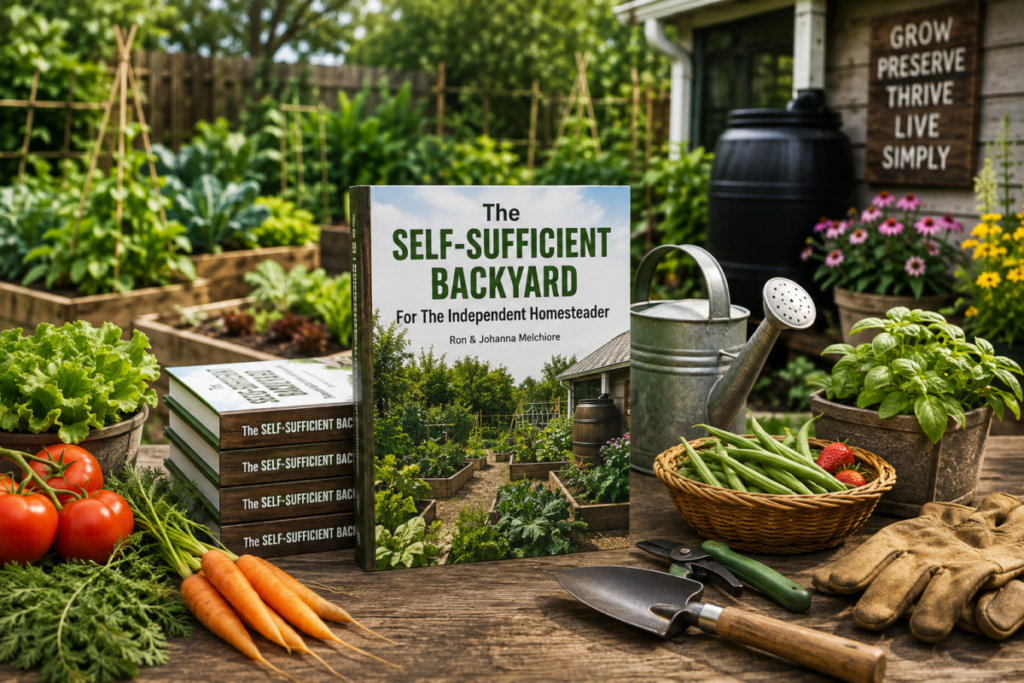
What Does a Self-Sufficient Backyard Really Mean?
A self-sufficient backyard is not one exact type of garden.
It can look different for every family.
For one homeowner, it might mean a few raised beds with tomatoes, peppers, herbs, and greens. For another, it may include fruit trees, composting, rainwater collection, food storage, chickens, or solar power.
The important part is that the backyard provides something useful.
You might grow food.
You might reduce garden waste through composting.
You might create a better system for storing seasonal produce.
You might even use your outdoor space to learn skills that make your household more prepared for changes in food prices, weather, or supply problems.
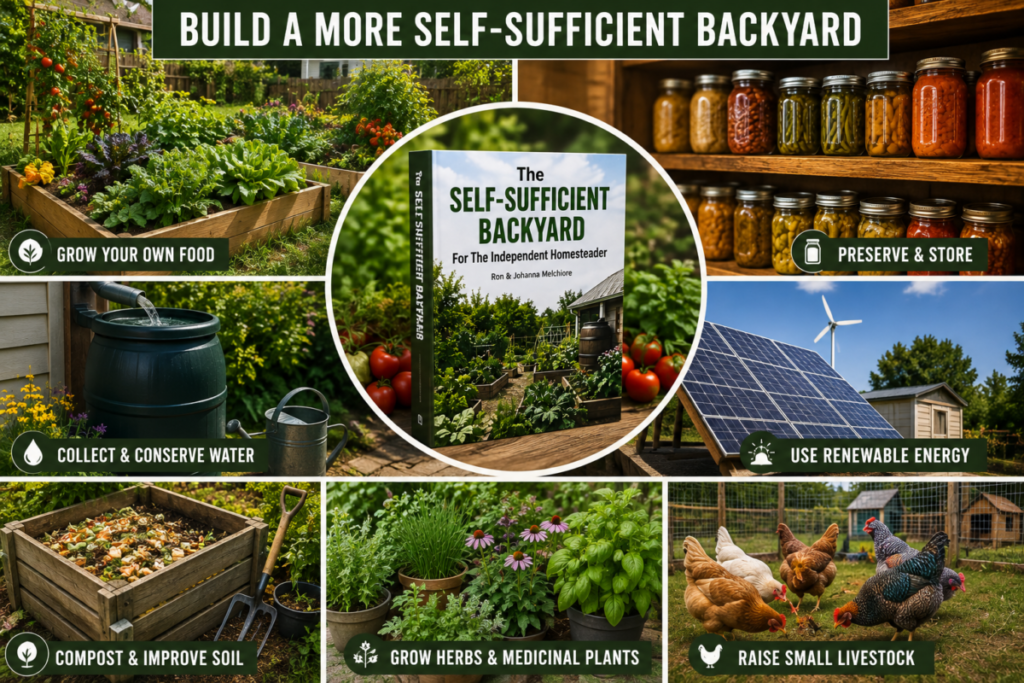
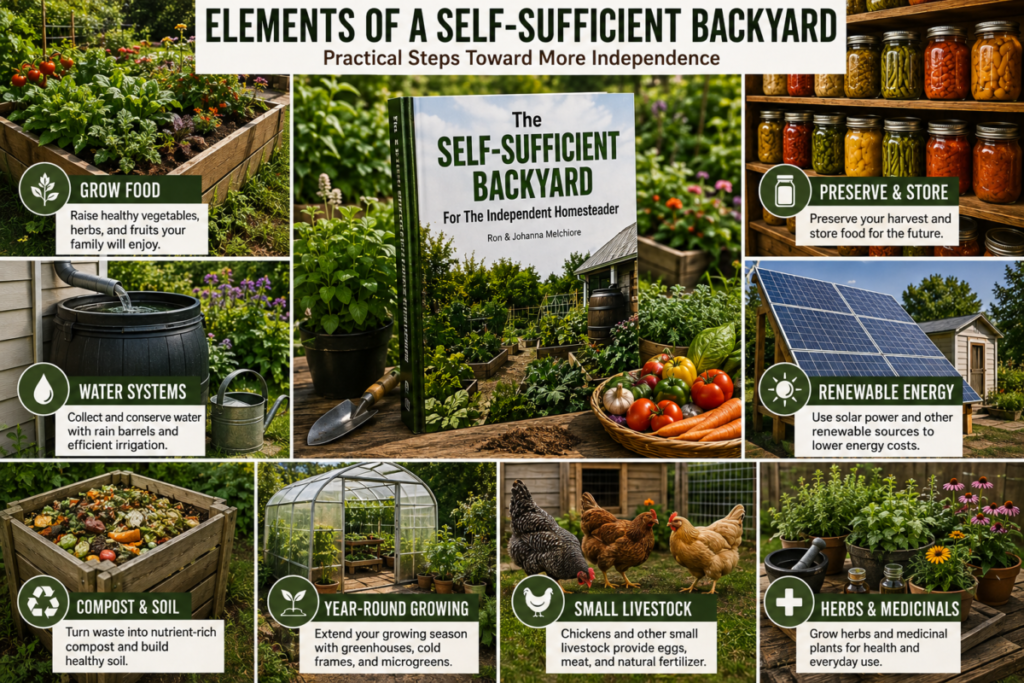
The official Self-Sufficient Backyard materials cover a broad range of these ideas, including food production, food preservation, water systems, solar power, composting, small livestock, and year-round growing.
Self-sufficiency is therefore less about reaching a perfect finish line and more about building useful systems step by step.
Why Are More Americans Interested in Backyard Self-Sufficiency?
There are several reasons people become interested in self-sufficient living.
Growing Your Own Food
Home gardening gives you a direct connection to the food you grow.
Even a small garden can produce herbs, greens, tomatoes, peppers, beans, or other crops during the right season.
You also learn where your food comes from and what goes into growing it.
Building Practical Skills
Gardening, food preservation, composting, and basic home projects are useful skills.
Once you learn them, those skills can be used year after year.
Preparing for Unexpected Changes
Some people are interested in backyard food production because they want to be better prepared.
A productive garden will not replace a grocery store. Still, having some food-growing skills can give a household another option.
Enjoying a More Sustainable Lifestyle
Some homeowners simply want to use their backyard in a more productive way.
Instead of treating the space as decoration only, they turn part of it into a garden, greenhouse, herb area, composting station, or food-producing space.
Creating a Family Project
A backyard garden can also become a hands-on learning experience for children and adults.
Planting seeds, watching crops grow, harvesting food, and saving seeds can turn ordinary outdoor space into something the whole family can use.
What Can You Grow in a Self-Sufficient Backyard?
You do not need acres of land to start growing useful crops.
The best plants for your backyard depend on your climate, sunlight, soil, available space, and the amount of time you have.
Vegetables
Vegetables are often the easiest place to begin.
Popular choices include:
- Tomatoes
- Peppers
- Lettuce
- Green beans
- Cucumbers
- Carrots
- Radishes
- Zucchini
Start with crops your household already eats.
There is little value in growing ten varieties of vegetables that nobody wants to use.
Herbs
Herbs can be useful even in very small spaces.
Basil, parsley, mint, rosemary, thyme, oregano, and chives can often grow in containers or small garden beds.
They can also be used fresh or preserved for later.
Fruits and Berries
Depending on your climate and space, you may also grow strawberries, raspberries, blueberries, grapes, apples, peaches, or other fruit.
Fruit trees take more planning than annual vegetables, but they can become long-term garden assets.
Microgreens and Fast-Growing Crops
People with limited space can also explore microgreens and other fast-growing crops.
These can work well indoors when outdoor space is limited.
The official Self-Sufficient Backyard materials also discuss year-round growing methods and microgreens for small indoor spaces.
How to Start a Backyard Vegetable Garden
Starting small is usually easier than trying to build a huge garden in the first season.
Choose the Right Location
Look for a space with enough sunlight and good drainage.
Most food crops need plenty of light, although exact needs vary by plant.
Watch the area for a few days and see how sunlight changes throughout the day.
Prepare the Soil
Healthy soil can make gardening much easier.
You can improve soil over time with compost and other organic material suited to your garden.
Do not assume that every backyard has ideal soil. In some areas, containers or raised beds may be a better option.
Choose Crops for Your Climate
The United States contains many different growing climates.
A crop that works well in Georgia may need a different planting schedule in Maine, Colorado, Texas, or Washington.
Check your local planting calendar before buying large amounts of seed.
Plan Your Garden Space
Think about how much you can realistically maintain.
A small garden that you actually care for is more useful than a large garden that becomes difficult to manage.
Leave enough room to walk between planting areas and reach the plants for watering and harvesting.
Create a Simple Watering Routine
Plants need consistent moisture, but overwatering can be a problem too.
A simple watering schedule is easier to follow when you understand each crop’s needs.
How to Grow More Food in a Small Backyard
You can make a surprisingly productive garden without a huge amount of land.
Use Raised Beds
Raised beds can help organize crops and make gardening easier to manage.
They can also be useful where the natural soil is poor.
Try Container Gardening
Containers work well for herbs, greens, peppers, tomatoes, and some other crops.
They are especially useful for patios, balconies, and small yards.
Grow Vertically
Some plants can be grown upward with trellises or other supports.
This can save ground space while allowing climbing crops to use available vertical room.
Practice Succession Planting
Instead of planting everything at once, you can plant certain crops at different times.
This may spread out harvests and help you use the same garden space more efficiently.
Choose Crops Your Family Uses
This is one of the simplest ways to make a garden more practical.
Focus first on foods you already buy and enjoy.
How to Build a More Sustainable Backyard
A productive backyard is not only about planting seeds.
It can also include systems that reduce waste and make better use of resources.
Composting
Kitchen scraps and yard waste can often be turned into compost through the right process.
Finished compost can then be used as part of a soil-building routine.
Saving Water
Water is one of the most important resources in any garden.
Mulch, efficient watering, healthy soil, and good plant selection can all help you use water more wisely.
Rainwater Collection
Rainwater collection can be part of a broader backyard sustainability plan.
The exact rules vary by location, so homeowners should check local laws and regulations before installing a collection system.
The Self-Sufficient Backyard materials include dedicated sections on water collection and irrigation systems.
Reusing Yard Waste
Leaves, grass clippings, branches, and other yard materials may have uses beyond the trash bin.
Depending on the material, some can become compost, mulch, or garden material.
Improving Soil Over Time
Good soil is an investment.
Adding organic matter, avoiding unnecessary disturbance, and choosing plants suited to the site can help build a healthier garden system.
Backyard Food Storage and Preservation Basics
Growing more food creates a new problem.
What do you do with everything when the garden produces more than your family can eat?
That is where preservation becomes important.
Freezing
Freezing can be a convenient way to store many fruits and vegetables.
Drying
Some herbs, fruits, and vegetables can be dried under appropriate conditions.
Canning
Canning can preserve many foods for longer storage, but it must be done using tested methods and safe processing times.
Root-Cellar Style Storage
Some crops can be stored for longer periods in cool, dark, properly controlled conditions.
Seed Saving
Saving seeds from suitable plants can also reduce the need to buy seed every season.
The official Self-Sufficient Backyard materials place a strong focus on food preservation and longer-term storage as part of a broader self-reliance system.
Common Mistakes Beginners Make
Self-sufficient gardening sounds exciting, but beginners can easily take on too much.
Starting Too Big
A huge first garden can quickly become overwhelming.
Start with a manageable area.
Choosing the Wrong Plants
Growing unusual crops simply because they sound interesting can waste time and money.
Choose plants that fit your climate and your family’s needs.
Ignoring Water Management
A garden can struggle when watering is inconsistent.
Think about water before planting a large garden.
Forgetting Soil Preparation
Poor soil can lead to weak growth.
Spend time understanding your soil instead of trying to fix everything with more fertilizer.
Trying to Do Everything at Once
You do not need a garden, greenhouse, chicken coop, solar system, rainwater system, and root cellar in the first month.
Build one useful system.
Then build another.
How a Backyard Homestead Can Save Money Over Time
A productive backyard may reduce the amount you spend on some foods.
But savings are not automatic.
Seeds, soil, containers, tools, irrigation equipment, fencing, fertilizer, and other supplies all cost money.
That means you should think about value, not just potential savings.
One practical approach is to grow things that are expensive to buy or that your family uses often.
Herbs can be a good example.
So can tomatoes, greens, berries, or other produce that you regularly purchase.
Over time, you may also save by reusing compost, saving seeds, learning to repair simple garden equipment, and preserving surplus produce.
The goal is not to turn every backyard into a business.
The goal is to make your outdoor space work harder for your household.
The Self-Sufficient Backyard Book: What Is It?
The Self-Sufficient Backyard is a guide created by Ron and Johanna Melchiore, who describe decades of off-grid living and hands-on experience with gardening, food production, water systems, energy, and homesteading.
The current official book page says the guide covers more than 50 step-by-step projects along with food production, preservation, water collection, solar power, composting, small livestock, and year-round growing.
The book is aimed at people who want a broader approach to self-sufficiency rather than a basic vegetable-gardening guide.
That difference is important.
A traditional gardening book may focus mainly on planting, soil, pests, and harvesting.
A self-sufficiency guide can take a wider view and connect food production with storage, water, energy, and household resilience.
Learn More About The Self-Sufficient Backyard Book
What Can You Learn From a Self-Sufficient Backyard Guide?
A guide like this can be useful when you want to connect different backyard projects into one larger plan.
According to the official materials, the book covers topics such as:
- Growing food
- Food preservation
- Water collection
- Irrigation
- Solar power
- Composting
- Small livestock
- Greenhouse growing
- Microgreens
- Medicinal gardening
- Year-round food production
The authors also present projects designed for different property sizes, including smaller suburban spaces.
That makes the book especially interesting for someone who does not necessarily want a large rural homestead.
You can take individual ideas and adapt them to your own property.
Not every project will make sense for every household.
That is normal.
The real value of a guide is often in giving you options.
Who Might Find This Book Useful?
Beginner Gardeners
If you are new to gardening, a step-by-step resource can help you understand how different systems fit together.
Homeowners With Small Backyards
A small property does not automatically mean you cannot improve your food-growing capacity.
Containers, raised beds, vertical growing, and careful planning can all help.
People Interested in Homesteading
If you are interested in moving beyond a basic vegetable garden, a broader homesteading guide may be useful.
Emergency Preparedness Enthusiasts
Some people want to become more prepared by learning how to produce, preserve, and store food.
A productive backyard can become one part of that larger plan.
Families Interested in Growing Their Own Food
Gardening can also be a practical family activity.
Children can learn about seasons, plants, soil, food, and responsibility by helping with simple garden tasks.
Pros and Cons of Using a Backyard Self-Sufficiency Guide
No book can do the work for you.
You still need to adapt the information to your own climate, budget, property, and experience.
Pros
- Covers more than basic gardening
- Connects food, water, storage, and energy ideas
- Useful for people interested in self-reliance
- Includes practical project ideas
- Can provide a structured starting point
- Suitable for people planning a broader homestead
Cons
- Not every project will fit every property
- Some projects may require tools or additional materials
- Climate differences can change how well a technique works
- Some systems may require more time and money than beginners expect
- A book cannot replace local regulations, professional advice, or hands-on experience
The best way to use a guide is to choose projects that make sense for your situation.
You do not need to copy an entire homestead.
Check Out The Self-Sufficient Backyard Book
Self-Sufficient Backyard vs. Traditional Home Gardening
The two ideas overlap, but they are not exactly the same.
A traditional garden usually focuses on growing plants.
A self-sufficient backyard takes a wider approach.
| Traditional Home Gardening | Self-Sufficient Backyard |
|---|---|
| Focuses mainly on plants | Covers broader household needs |
| Seasonal growing | May include year-round planning |
| Gardening tools and soil | Gardening plus water and storage systems |
| Harvest vegetables and herbs | Grow, preserve, store, and reuse |
| Mainly food production | Food, water, energy, and self-reliance |
This does not mean one approach is better.
It depends on your goal.
If you only want fresh vegetables, a simple garden may be enough.
If you want to build a broader system around food, water, storage, and independence, self-sufficient backyard planning may be more interesting.
A Simple 30-Day Backyard Self-Sufficiency Plan
You do not need to transform your whole property in one weekend.
Try a four-week approach instead.
Week 1: Plan
Walk around your property.
Look at sunlight, water access, soil, available space, and storage areas.
Decide what you want to grow.
Keep your first goal small.
Week 2: Prepare
Choose containers or garden beds.
Prepare soil.
Buy basic tools and seeds.
Create a simple watering plan.
Week 3: Plant
Plant the crops that fit your current season.
Label everything.
Keep notes on what you planted and when.
Week 4: Maintain
Watch your plants.
Check moisture.
Remove weeds.
Look for pests.
Adjust your routine based on what you see.
Once that system feels manageable, start your next project.
That might be composting.
It might be food preservation.
It might be a small greenhouse.
It might be rainwater collection where local rules allow it.
The important part is progress.
Frequently Asked Questions About Self-Sufficient Backyards
Can a small backyard become more self-sufficient?
Yes. A small backyard can still produce herbs, vegetables, fruits, and other useful resources. Containers, raised beds, and vertical growing can help you use limited space more efficiently.
What should beginners grow first?
Start with crops your family already eats and plants that match your local growing conditions. Herbs, greens, tomatoes, peppers, beans, and other easy-to-manage crops can be good starting points.
How much does a backyard garden cost?
There is no single price.
A small container garden may cost relatively little, while raised beds, irrigation, fencing, greenhouses, solar systems, or livestock can require much more money.
Start with a budget that you are comfortable maintaining.
Can you grow food year-round in the USA?
In some regions, yes. In others, you may need greenhouses, cold frames, indoor growing, or seasonal planning.
Your local climate will have a major impact on what is possible.
Is homesteading possible in a suburban backyard?
Yes, to a limited degree.
Suburban homeowners may be able to grow food, compost, preserve produce, collect some rainwater where permitted, or keep certain animals if local rules allow it.
Is The Self-Sufficient Backyard worth reading?
It may be worth considering if you want a broader look at backyard self-sufficiency rather than gardening alone.
The official materials describe projects covering food, water, energy, preservation, composting, and other homesteading topics.
Do I need a large property?
No.
The useful size of your project depends on what you want to produce.
A small garden can still provide herbs and vegetables.
Larger systems simply give you more options.
Can a self-sufficient backyard replace a grocery store?
For most households, no.
A backyard garden can supplement your food supply, but the amount you can produce depends on land, climate, time, skills, water, and many other factors.
It is better to think of self-sufficiency as reducing dependence rather than eliminating it completely.
Final Thoughts
Building a more self-sufficient backyard does not require you to move to a remote farm.
It can begin with one raised bed.
Then you might add herbs.
After that, perhaps composting, food preservation, or a small greenhouse.
Over time, these small projects can become a larger system.
That is the most practical way to think about self-sufficient living.
You are not trying to become completely independent overnight.
You are building useful skills and resources one step at a time.
The Self-Sufficient Backyard is designed around this broader approach. The authors describe decades of experience with off-grid living, food production, water management, preservation, energy systems, and other homesteading projects.
For someone who wants more than a basic vegetable garden, the book may be a useful resource for exploring different ways to make a backyard more productive and resilient.
Before purchasing, review the current book format, price, delivery details, and offer information.
View The Self-Sufficient Backyard Book
Affiliate Disclosure
This article contains affiliate links. If you purchase The Self-Sufficient Backyard Book through one of our affiliate links, we may earn a commission at no additional cost to you.
General Disclaimer
This article is for informational and educational purposes only. Gardening, water collection, food preservation, energy projects, livestock, and other homesteading activities can involve safety, legal, environmental, or financial considerations. Always check local rules and use appropriate safety practices before starting a project.