
What Is the Oral Microbiome? Why It Matters for Healthy Teeth and Gums
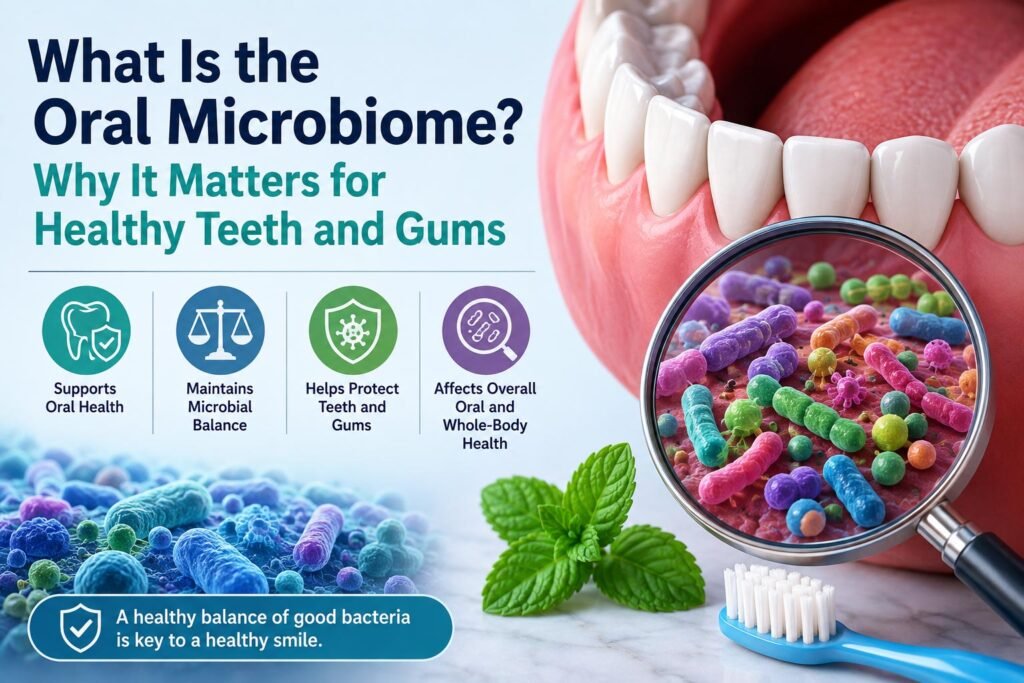
Your mouth is home to a surprisingly large community of microorganisms. These microorganisms live on the teeth, tongue, gums, cheeks and other surfaces throughout the mouth. Together, this community is commonly referred to as the oral microbiome.
The oral microbiome is not automatically something bad. In fact, many microorganisms normally live in the mouth without causing disease. The important question is how the overall microbial community interacts with the oral environment and with other factors such as diet, hygiene, saliva and lifestyle.
Researchers have become increasingly interested in the oral microbiome because changes in the microbial community may be associated with oral-health conditions. Research into probiotics has also explored whether certain beneficial microorganisms can influence aspects of the oral environment. Recent reviews suggest that some probiotic strains may provide modest benefits for selected oral-health outcomes, but the evidence varies considerably between strains, products and clinical outcomes.
In this guide, we’ll explain what the oral microbiome is, why it matters, what can influence it, how you can support good oral hygiene, and what researchers currently say about oral probiotics.
What Is the Oral Microbiome?
The oral microbiome is the collection of microorganisms that live in and around the mouth.
These include many different types of bacteria and other microorganisms. They can be found on surfaces such as:
- Teeth
- Tongue
- Gums
- Inner cheeks
- Saliva
- Areas between teeth
The microorganisms in the mouth don’t all behave in the same way. Some are associated with healthy conditions, while others can contribute to oral problems when environmental conditions allow them to become more abundant.
This is why the term microbial balance is often discussed when researchers study oral health.
However, it is important not to oversimplify the subject. Having bacteria in the mouth does not automatically mean that something is wrong. The oral microbiome is a complex ecosystem, and scientists are still learning how individual microorganisms interact with one another and with the host.
Research published in 2026 continues to investigate the oral microbiome’s relationship with periodontal disease and other aspects of health.
Why Is the Oral Microbiome Important?
The oral microbiome exists in a constantly changing environment.
Food, saliva, oral hygiene, medications, lifestyle habits and other factors can influence the conditions inside the mouth. These changes may affect which microorganisms thrive.
One reason researchers are interested in the oral microbiome is its relationship with oral conditions involving plaque and bacteria.
For example, a 2026 umbrella review of meta-analyses examined probiotic research involving outcomes such as cariogenic bacteria and halitosis. The review found that some probiotic interventions were associated with modest improvements in certain outcomes, but it also emphasized substantial differences between strains, delivery methods and study designs.
That means the oral microbiome is important, but it should not be treated as a simple “good bacteria versus bad bacteria” system.
A healthy oral-care strategy should focus on maintaining the overall oral environment rather than trying to eliminate all microorganisms.
What Can Affect the Balance of the Oral Microbiome?
Several everyday factors can influence the environment in your mouth.
Poor Oral Hygiene
Plaque is a biofilm that develops on tooth surfaces. If it isn’t regularly removed through appropriate oral hygiene, the environment can become more favorable to microorganisms associated with dental problems.
Regular brushing and cleaning between teeth are therefore important parts of maintaining oral health.
Diet and Sugar Intake
The foods and drinks you consume can influence the environment in your mouth.
Frequent exposure to sugary foods and drinks can contribute to conditions that favor acid-producing bacteria and can increase the risk of tooth decay.
This doesn’t mean you need to eliminate every food containing sugar. Instead, overall dietary habits and frequency of exposure are important considerations.
Smoking and Tobacco
Tobacco use can negatively affect oral health and is associated with a range of dental and gum problems.
Avoiding tobacco is therefore one of the most useful lifestyle choices for protecting your mouth.
Dry Mouth
Saliva plays an important role in the mouth.
It helps lubricate oral tissues and contributes to the mouth’s natural defense mechanisms. When saliva production is reduced, the oral environment can change.
Dry mouth can have many causes, including certain medications and medical conditions.
If you experience persistent dry mouth, discussing the problem with a healthcare professional or dentist can help identify the underlying cause.
Certain Medications
Some medications can influence saliva production or other aspects of the oral environment.
If you notice changes in your mouth after starting a medication, don’t stop prescribed treatment on your own. Instead, discuss your concerns with your healthcare professional.
Lifestyle Factors
Sleep, stress, hydration, smoking, alcohol consumption and general health can all form part of the broader picture of oral health.
No single lifestyle change can guarantee a particular oral-health outcome, but healthy habits can support overall wellbeing.
Signs That Your Oral Health May Need More Attention
Changes in your mouth don’t necessarily mean that your oral microbiome is “imbalanced.” Symptoms can have many different causes.
However, certain signs deserve attention.
Bad Breath
Occasional bad breath is common. Persistent or recurring bad breath, however, can sometimes be associated with oral hygiene issues, gum problems, dry mouth or other conditions.
If bad breath continues despite good oral hygiene, consider discussing it with a dentist.
Bleeding Gums
Gums that regularly bleed during brushing or cleaning between teeth should not simply be ignored.
Bleeding can have several causes, including inflammation. A dental professional can determine what is causing the problem.
Plaque Buildup
Plaque can accumulate around teeth, particularly when brushing and interdental cleaning are inconsistent.
Daily oral hygiene helps remove plaque before it becomes more difficult to manage.
Gum Sensitivity
Tender or sensitive gums can occur for different reasons.
Persistent symptoms are worth discussing with a dental professional rather than trying to diagnose the cause yourself.
Persistent Mouth Problems
Unexplained changes, sores, swelling, persistent pain or other unusual symptoms should be evaluated by an appropriate healthcare professional.
A supplement should never be used as a substitute for diagnosis or treatment.
How to Support a Healthy Oral Microbiome
You don’t need an expensive supplement to start taking better care of your oral health.
Several basic habits remain important.
Brush Regularly
Brush your teeth regularly using fluoride toothpaste and an appropriate toothbrush.
Good brushing helps remove plaque and food particles from tooth surfaces.
Clean Between Your Teeth
A toothbrush cannot effectively clean every surface between teeth.
Floss, interdental brushes or another dentist-recommended method can help clean areas that are difficult to reach with a toothbrush alone.
Eat a Balanced Diet
A varied diet that includes nutrient-rich foods can support overall health.
For dental health, it is also useful to limit frequent consumption of sugary foods and drinks.
Stay Hydrated
Adequate hydration supports normal saliva production and general health.
Water can also help rinse food particles from the mouth between meals.
Avoid Tobacco
If you use tobacco, quitting can be one of the most valuable steps you can take for your oral and overall health.
If you need help quitting, speak with a qualified healthcare professional about evidence-based options.
Visit Your Dentist Regularly
Professional dental examinations can identify problems that may not be obvious at home.
Your dentist can also recommend an oral-hygiene routine based on your individual needs.
Can Probiotics Support the Oral Microbiome?
This is one of the most interesting areas of oral-health research.
Probiotics are live microorganisms that are intended to provide a health benefit when consumed in adequate amounts. Researchers have studied whether specific probiotic strains can influence microorganisms in the mouth.
A 2026 umbrella review examining multiple meta-analyses found that probiotics were associated with reductions in certain cariogenic bacteria in many comparisons and improvements in some measures of halitosis. However, the researchers also highlighted substantial heterogeneity, differences in probiotic strains and delivery methods, and limitations in the quality of evidence.
Another 2026 systematic review reported that probiotic supplementation showed modest, strain-specific effects on aspects of oral microbiota and certain salivary parameters, while also noting methodological limitations and variability across studies.
This distinction is important.
Research into oral probiotics does not mean that every probiotic supplement has been proven to prevent or treat every dental condition.
The specific strain, dose, formulation, duration and health outcome all matter.
ProDentim and the Oral Microbiome
ProDentim is marketed as an oral probiotic supplement designed around the concept of supporting the oral microbiome.
The product’s official information describes it as containing multiple probiotic strains and other ingredients. However, the manufacturer’s own disclaimer states that its product statements have not been evaluated by the FDA and that the products are not intended to diagnose, treat, cure or prevent disease.
That makes it important to separate the general science of oral probiotics from claims about a particular commercial product.
If you’re researching ProDentim specifically, you can read our detailed ProDentim Review, where we discuss its ingredients, potential benefits, how it is used, limitations and other considerations.
If you want to investigate the product directly, you can also learn more about ProDentim here.
Oral Probiotics vs. Regular Oral Hygiene
Oral probiotics and regular oral hygiene shouldn’t be viewed as competing approaches.
| Regular Oral Hygiene | Oral Probiotics |
|---|---|
| Brushing removes plaque from tooth surfaces | Designed to introduce specific probiotic microorganisms |
| Fluoride toothpaste helps protect teeth against decay | Research investigates effects on selected oral microorganisms |
| Interdental cleaning reaches areas between teeth | Evidence varies by strain and formulation |
| Dental checkups allow professional evaluation | Generally considered a supplementary approach |
| Established foundation of oral care | An area of continuing research |
The most important takeaway is that oral probiotics should not replace established oral-care habits.
If someone is considering an oral probiotic, it makes more sense to think of it as a potential addition to an existing routine rather than a replacement for brushing, interdental cleaning or professional dental care.
When Should You See a Dentist?
Not every oral-health problem should be handled with home remedies or supplements.
Consider seeing a dentist if you experience:
- Persistent tooth pain
- Swelling around a tooth or gum
- Repeated gum bleeding
- Severe sensitivity
- A loose permanent tooth
- Persistent bad breath
- Signs of a possible infection
- Unexplained sores or changes in the mouth
- Symptoms that don’t improve with normal oral hygiene
If you have severe pain, significant swelling, fever or other signs that could indicate an infection, seek professional care promptly.
The goal of an oral-health supplement should never be to delay necessary dental treatment.
Frequently Asked Questions About the Oral Microbiome
What is the oral microbiome?
The oral microbiome is the community of microorganisms living in the mouth, including on the teeth, tongue, gums, cheeks and in saliva.
Why is the oral microbiome important?
It is part of the complex environment of the mouth and interacts with oral tissues, food, saliva and other microorganisms. Researchers are studying how changes in this community relate to oral health and disease.
Can diet affect the oral microbiome?
Yes. Diet can influence the oral environment. Frequent consumption of sugary foods and drinks, for example, can create conditions that favor acid-producing bacteria associated with tooth decay.
Can probiotics help the oral microbiome?
Research suggests that some specific probiotic strains may influence certain oral-health outcomes. However, effects vary substantially by strain and formulation, and current evidence does not establish that every probiotic product will produce the same results.
Can probiotics replace brushing and flossing?
No. Oral probiotics should not be considered a replacement for regular brushing, cleaning between teeth or professional dental care.
How can I support a healthy oral microbiome?
Start with the basics: brush regularly with fluoride toothpaste, clean between your teeth, maintain a balanced diet, limit frequent sugary foods and drinks, avoid tobacco, stay hydrated and visit your dentist regularly.
Final Thoughts
The oral microbiome is a complex ecosystem that scientists are still learning about. Research into probiotics has produced interesting findings, particularly around certain oral bacteria and measures of bad breath, but the evidence remains strain-specific and variable.
A 2026 umbrella review found potentially modest benefits from some probiotic interventions while emphasizing differences among strains, delivery methods and study quality.
For that reason, the best approach is not to look for a single product that promises to solve every oral-health problem.
Instead, build a strong foundation with good oral hygiene, a balanced diet, hydration, avoidance of tobacco and regular dental care.
If you’re interested in exploring oral probiotic supplements, learn about the evidence, check the ingredients and understand what the product is—and isn’t—intended to do.
For readers specifically researching ProDentim, our detailed ProDentim Review provides additional information about the product.
Interested in Learning More About ProDentim?
If you want to review the current product information and offer, you can visit the official ProDentim offer here.
Affiliate Disclosure
This article contains affiliate links. If you purchase a product through one of our affiliate links, we may earn a commission at no additional cost to you.
Health Disclaimer
This article is provided for educational and informational purposes only and is not medical or dental advice. It does not diagnose, treat, cure or prevent any disease. Always consult a qualified dentist or healthcare professional for persistent or concerning oral-health symptoms. The ProDentim manufacturer also states that its product information is not intended to replace professional medical advice.