
Ted’s Woodworking vs Free Woodworking Plans: Which Is Better for DIY Builders?
Finding a woodworking plan is easy. Finding a woodworking plan that gives you enough information to actually finish the project is a different story.
A quick search for free woodworking plans can produce thousands of results. You can find furniture tutorials, downloadable PDFs, YouTube videos, Pinterest projects, blog tutorials, community posts, and individual blueprints without paying anything.
At the same time, products such as Ted’s Woodworking attract people who want a much larger collection of woodworking plans in one place.
So which option makes more sense?
Free woodworking plans or a paid woodworking plan library?
The answer depends less on the word free and more on what you actually need for your next project.
A beginner building one small shelf may have completely different requirements from a hobbyist who wants to build furniture, outdoor projects, workshop storage, cabinets, tables, and other projects throughout the year.
This comparison looks at both approaches so you can decide which one fits your woodworking goals.
Free Woodworking Plans: What Do You Actually Get?
The biggest advantage of free woodworking plans is obvious: there is no upfront cost.
You can search Google, Bing, YouTube, Pinterest, woodworking communities, and individual woodworking websites to find plans and tutorials for almost every type of project.
You may find plans for:
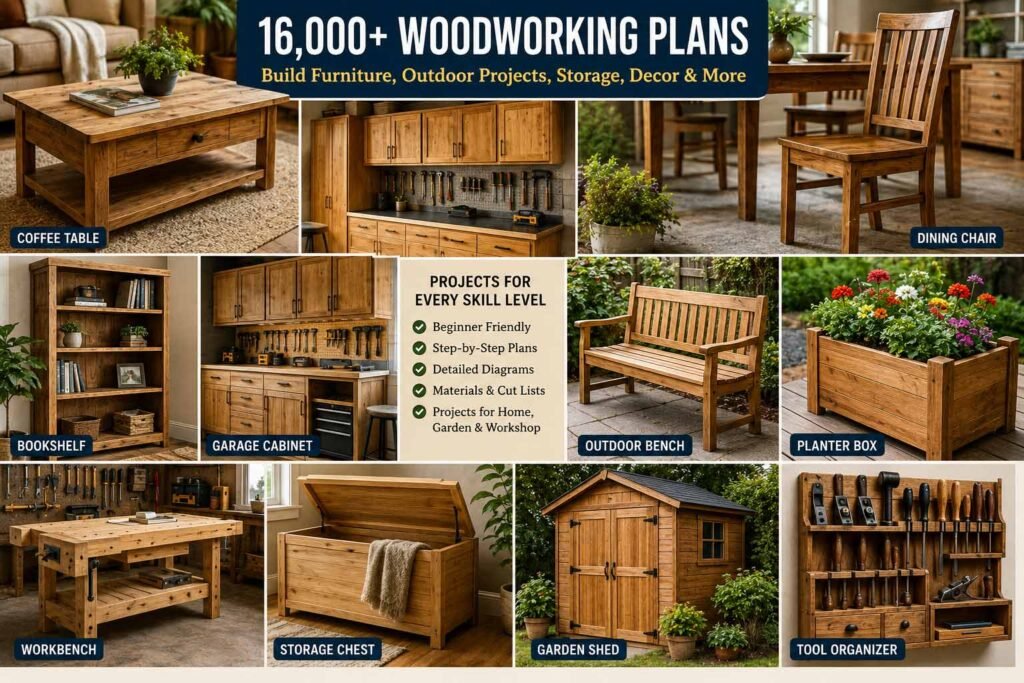
- Coffee tables
- Wooden benches
- Bookshelves
- Cabinets
- Planter boxes
- Outdoor furniture
- Workbenches
- Storage projects
- Garden structures
- Small beginner projects
Some free plans can be extremely useful.
A skilled woodworker may publish a complete project tutorial with measurements, photographs, a materials list, cutting instructions, and assembly steps simply because they enjoy sharing what they built.
The problem is consistency.
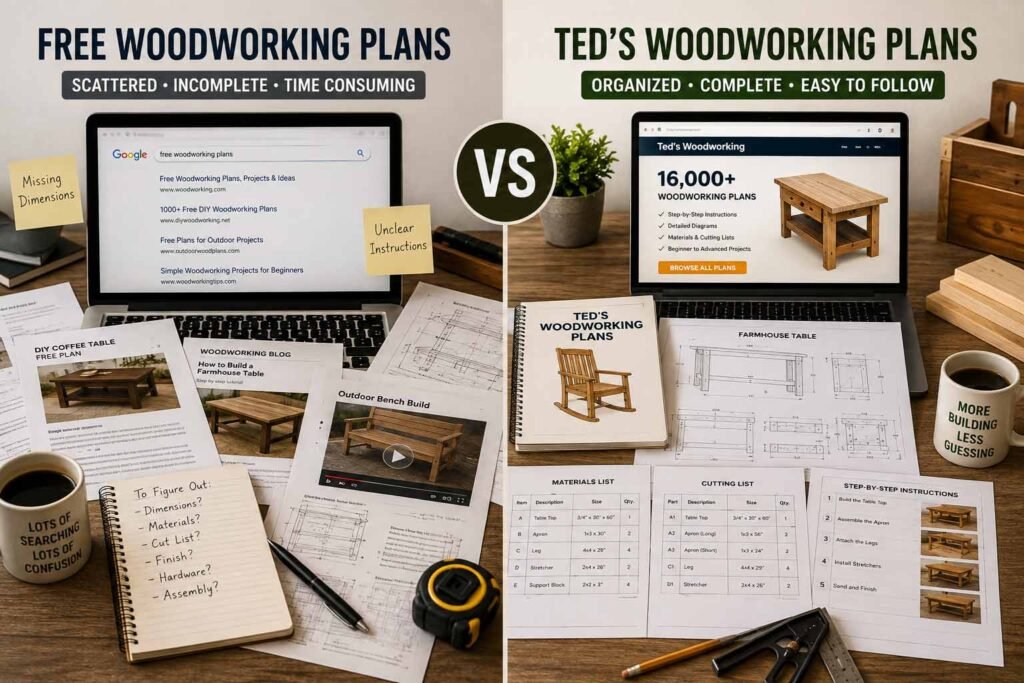
One free plan may be excellent while the next one may be missing dimensions, unclear photographs, incomplete instructions, or important construction details.
That means finding the right free woodworking plan can take time.
The Hidden Cost of Free Plans
Free does not necessarily mean completely cost-free.
You may not pay money for the plan, but you can spend something else:
Time.
Imagine you want to build a simple coffee table.
You find one promising plan.
Then you discover that the dimensions are incomplete.
You search again.
Another website gives you better pictures, but the materials list is missing.
You find another tutorial, but it uses tools you don’t own.
Then you watch a YouTube video, pause it repeatedly, take screenshots, and try to work out the dimensions yourself.
After an hour or two, you may finally have enough information to begin.
For some DIY builders, that process is part of the fun.
For others, it becomes frustrating.
This is one of the biggest differences between searching for individual free plans and using a larger woodworking-plan library.
You are often trading money for research time.
What Is Ted’s Woodworking?
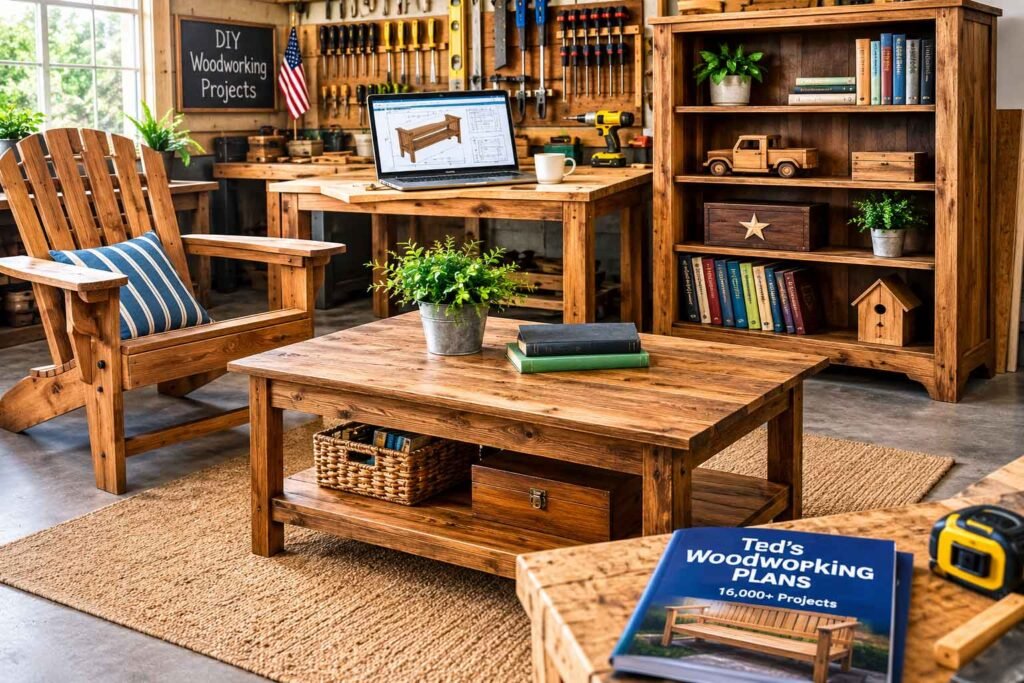
Ted’s Woodworking is marketed as a large digital collection of woodworking projects rather than a single-project tutorial.
Its promotional material emphasizes a library of more than 16,000 woodworking plans, along with project drawings, instructions, materials information, and related resources.
That scale is the main reason people search for phrases such as:
teds woodworking
teds woodworking plans
tedswoodworking
ted’s woodworking
ted woodworking plans
teds woodworking projects
Instead of searching for one project at a time, the idea is to have a broad selection available when you are ready to build something new.
That makes the product particularly interesting for hobbyists who expect to complete multiple woodworking projects rather than someone who wants one specific blueprint.
Ted’s Woodworking vs Free Plans: The Main Difference
The most important difference is how you find and use the projects.
With free woodworking plans, you usually discover a project first and then evaluate the plan.
With a large paid collection, the appeal is starting with a library of projects and choosing what to build.
Think of the two approaches this way:
Free plans
Search → Compare → Check quality → Gather information → Build
Large plan library
Browse → Choose project → Review plan → Gather materials → Build
Neither approach is automatically better.
It depends on how much you enjoy researching and how often you build.
Someone who only builds one project occasionally may prefer free plans.
Someone who is constantly looking for new furniture, workshop, storage, or outdoor projects may prefer having many ideas collected together.
Which Option Is Better for Beginners?
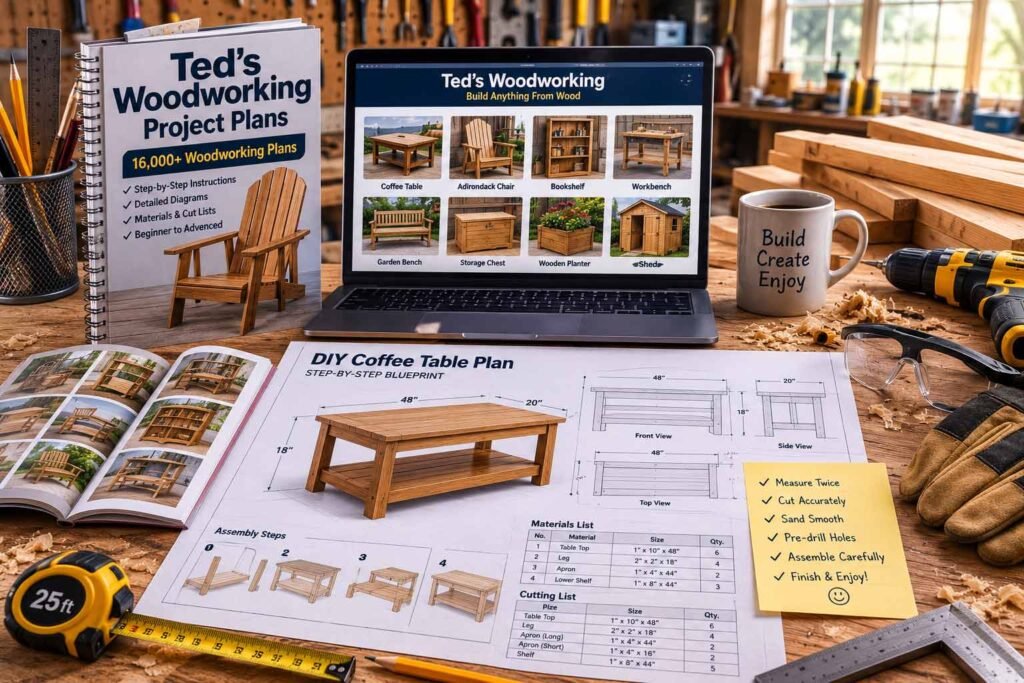
For beginners, free plans have one major advantage.
They allow you to experiment without committing money to a large library.
You can try a simple project and see whether woodworking is something you genuinely enjoy.
A beginner might start with a small shelf, planter box, simple bench, or basic storage box.
Once you understand basic measurements, cutting, sanding, drilling, fastening, and finishing, you may become interested in more complicated projects.
That is where a larger plan library can become more appealing.
Ted’s Woodworking is marketed toward different skill levels, including beginners, but that should not be interpreted as meaning every project is suitable for someone who has never touched a woodworking tool.
A smart beginner should always select projects according to their current skills, available tools, workspace, and comfort level.
Begin with a project you can realistically finish.
Finishing a simple project successfully is often more valuable than starting a complicated project and abandoning it halfway through.
What About Project Variety?
This is one category where a large woodworking collection has an obvious appeal.
If you search for free plans, you can find almost anything—but you have to find it.
A large plan collection is designed around the opposite idea.
Instead of asking:
“Where can I find a plan for this?”
you can begin with:
“What should I build next?”
That opens up a different way of thinking about woodworking.
Maybe you finished a coffee table last month.
Now you want a matching side table.
After that, you might build a storage bench.
Then perhaps a garage organizer.
Then outdoor seating.
Then a bookshelf.
Then a workbench.
For someone who enjoys woodworking as a long-term hobby, project variety can become more important than any individual plan.
What About Plan Quality?
This is where you should be realistic about both options.
Not every free woodworking plan is good.
But you also should not assume every paid plan is automatically perfect.
Independent reviews of Ted’s Woodworking have reached different conclusions. One reviewer reported significant concerns about organization and consistency, while other reviews have described the large project library and the inclusion of materials lists, diagrams, and instructions more positively.
That means you should avoid two extreme assumptions:
“Everything free is bad.”
and
“Everything paid is perfect.”
Neither is true.
The quality of the individual plan matters.
Before starting any project, look for:
- Clear dimensions
- Understandable drawings
- Material requirements
- Cutting information
- Assembly instructions
- Appropriate project complexity
- Realistic tool requirements
A beautiful picture of a finished piece of furniture is not enough.
You need information that helps you actually build it.
The Time Factor
For many DIY builders, this is the most overlooked comparison.
Suppose a free woodworking project takes you 90 minutes to research before you understand what materials and measurements you need.
That may not sound like much.
But imagine doing that twenty times.
You have now spent 30 hours researching plans.
If you enjoy the research, there is nothing wrong with that.
But if your goal is to spend your weekend actually building, a structured collection may become more attractive.
That is the real value proposition to consider.
You are not simply paying for woodworking plans.
You may also be paying for convenience, organization, and project discovery.
Whether that is worth paying for depends entirely on how often you build.
Free Plans Are Still Valuable
A fair comparison should not dismiss free resources.
Free woodworking plans can be fantastic.
You can find excellent tutorials from experienced woodworkers who explain exactly how they built a project.
YouTube can be especially useful when you want to see a real person demonstrate a technique.
Pinterest can be useful for discovering design ideas.
Forums and woodworking communities can provide practical advice from people who have completed similar builds.
Free plans are also useful when you have a very specific project in mind.
For example, if you want to build one particular type of planter box and find a detailed free plan with all the dimensions you need, there may be little reason to purchase a large collection just for that one project.
The best resource is the one that solves your specific problem.
When a Large Plan Library Makes More Sense
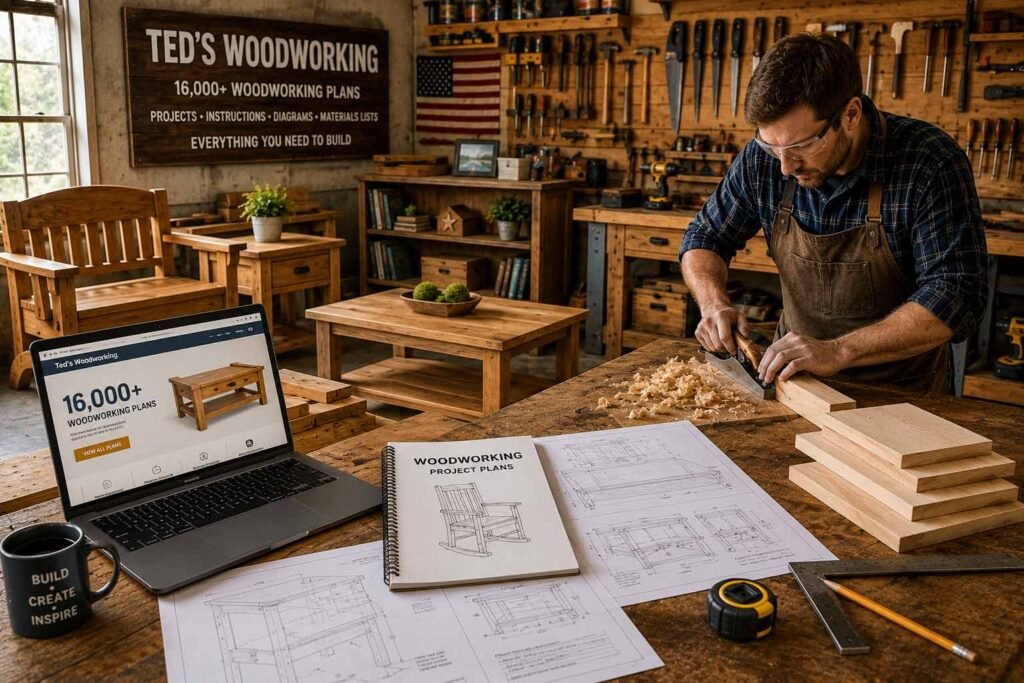
A large collection becomes more interesting when your woodworking goals are broader.
It may be worth exploring if you:
- Build projects regularly
- Like experimenting with different furniture designs
- Want many project ideas
- Build both indoor and outdoor furniture
- Work on garage organization
- Enjoy making custom home décor
- Want to explore beginner and intermediate projects
- Prefer having plans collected in one place
In that situation, searching Google for a new plan every weekend can become repetitive.
Having a large library can make project discovery easier.
The official marketing around Ted’s Woodworking specifically focuses on the breadth of its project collection and downloadable woodworking resources.
When Free Woodworking Plans May Be Better
Free plans may be the better choice when:
- You are only building occasionally.
- You want to test woodworking before spending money.
- You only need one simple project.
- You enjoy researching projects online.
- You already have a favorite woodworking website.
- You prefer learning from YouTube demonstrations.
- You are comfortable creating your own measurements and adapting designs.
For these users, buying a large library may be unnecessary.
There is nothing wrong with using free woodworking resources when they provide everything you need.
A Better Way to Compare the Two
Instead of asking:
“Should I use free plans or Ted’s Woodworking?”
ask these five questions:
1. How often will I build?
If you build once a year, free plans may be enough.
If you build every month, a large library becomes more useful.
2. Do I need one project or many?
One project favors a specific free or paid blueprint.
Multiple projects make variety more valuable.
3. How much research do I enjoy?
If searching, comparing, and adapting plans is fun for you, free resources can work well.
If you want to spend more time building than searching, convenience may matter more.
4. What level of detail do I need?
Beginners often benefit from clear measurements and logical instructions.
Experienced woodworkers may be comfortable filling in gaps themselves.
5. What tools do I already own?
A plan is only useful if you can realistically build it.
Always check the required equipment before buying materials.
What About the Ted’s Woodworking Package?
Searches such as teds woodworking package show that some users are specifically researching what they receive.
Public reviews describe the package as a large downloadable collection and discuss materials information, cutting lists, diagrams, and additional resources, although independent assessments differ on the consistency of the material.
This is why it is better to evaluate the package based on your intended projects rather than simply the number of plans advertised.
If you are interested in exploring the current offer, review the available information before deciding.
Explore the Complete Woodworking Plans
Disclosure: This article contains an affiliate link. If you purchase through the link, I may earn a commission at no additional cost to you.
Can Free Plans and Ted’s Woodworking Be Used Together?
Absolutely.
There is no rule saying you have to choose only one.
A smart DIY builder can use free tutorials for learning techniques and use a larger collection for project inspiration.
For example:
You might watch a free YouTube tutorial to learn how to make a particular wood joint.
Then you could use a woodworking plan to build a cabinet that uses that joint.
You might find a free outdoor furniture project for inspiration while using another plan collection to compare different designs.
The goal is not to become loyal to one source.
The goal is to build better projects with less frustration.
What Should You Check Before Starting Any Woodworking Project?
Regardless of where the plan comes from, take time to review it before cutting your first board.
Check the dimensions
Make sure you understand the measurements and whether they fit your available space.
Check the materials
Confirm the wood type, hardware, fasteners, glue, finish, and other materials.
Check the tools
Make sure you have the required equipment or understand what alternatives are appropriate.
Check the build sequence
Read the complete instructions before starting.
Check your skill level
Do not choose a project simply because the finished photograph looks impressive.
Check safety requirements
Use appropriate protective equipment and safe operating procedures for your tools.
A plan can guide construction, but it cannot replace responsible judgment in a real workshop.
The Bottom Line: Free or Paid?
There is no single winner.
Free woodworking plans win on price and flexibility.
You can search for exactly what you want and avoid paying for a collection you may never use.
Ted’s Woodworking wins on the idea of breadth and convenience.
If you are interested in exploring many projects instead of searching for one plan at a time, a large woodworking library can be attractive.
The most important factor is your personal woodworking habit.
If you are a casual DIYer who needs one project, start with quality free resources.
If you are a serious hobbyist who expects to build many different projects, exploring a large plan collection may make more sense.
The right choice is not about finding the “best” plan source for everyone.
It is about finding the best approach for the way you build.
If you want to compare the available plans and decide whether the collection fits your project goals, you can review the current offer here:
See the Complete Ted’s Woodworking Plans
Frequently Asked Questions
Are free woodworking plans really free?
Many are. However, the quality, completeness, and level of detail vary considerably between websites and individual creators.
Is Ted’s Woodworking better than free woodworking plans?
Not automatically. It may be more convenient for people looking for a large collection, while free plans can be better for someone who only needs one particular project.
Are Ted’s Woodworking plans suitable for beginners?
The product is marketed toward different skill levels, but beginners should select projects based on their experience and available tools rather than assuming every project will be easy.
Should I buy woodworking plans if I am new to woodworking?
You do not necessarily need to. Try a few beginner projects first and determine how often you expect to build.
What makes a woodworking plan useful?
Clear dimensions, materials information, cutting guidance, understandable illustrations, and logical assembly instructions are all useful characteristics.
Can I find furniture plans for free?
Yes. Many woodworking websites and individual creators publish furniture plans at no cost.
Why would someone pay for woodworking plans?
The main reasons can include convenience, project variety, organization, and having many ideas available in one resource.
Is a large collection useful if I only want one project?
Probably less so. A single high-quality project plan may be enough when your needs are very specific.
Can I use YouTube instead of woodworking plans?
YouTube is excellent for demonstrations and techniques. However, a video may not always provide the same type of written dimensions, cutting lists, or reference information as a dedicated plan.
What should beginners build first?
Simple projects such as shelves, small tables, planter boxes, storage boxes, or basic benches can be easier starting points than complicated furniture.
Are paid woodworking plans always better quality?
No. Price alone does not determine quality. Evaluate the actual information provided.
Where can I explore Ted’s Woodworking?
You can review the current woodworking plan offer here:
Explore Ted’s Woodworking Plans
Final Thought
Woodworking is supposed to be enjoyable.
Whether you find your next project through a free tutorial, a YouTube creator, a woodworking community, or a large plan collection, the most important thing is that the information helps you move from “I want to build this” to “I actually built it.”
Choose the resource that matches your budget, your available time, your skill level, and the kind of projects you want to create.
And before you buy any plan collection, make sure you understand what it provides and whether those resources match the projects you genuinely want to build.